By category
Choosing Pillow Boxes for Cosmetics
Cosmetic packaging carries more obligatory information per square inch than almost anything else. Designing the front first and hoping the back fits is the most common and most expensive mistake in the category.
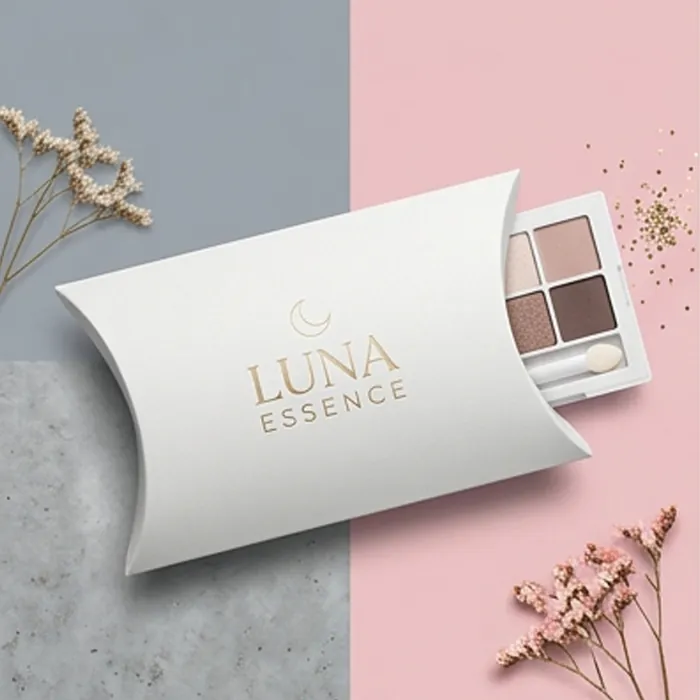
Build the pack from the back forward
This order of operations prevents almost every late redesign we see in beauty.
-
List every mandatory element
Ingredients, net contents, batch code, period after opening, responsible person or distributor details, warnings. Requirements differ by market.
-
Fix the minimum type size
Some markets specify a minimum height for mandatory text. Set it before laying anything out — it determines how much space the copy needs.
-
Assign the reverse panel
On a pillow box the reverse flat panel is the working surface for regulatory copy. Treat it as spoken for from the start.
-
Decide how coding is applied
Inline coding needs a clear, coatable area. Retrofitting a code onto a laminated surface does not work reliably.
-
Then design the front
With the obligations placed, the front panel is genuinely free, and usually better for having one job.
Finishes that read as beauty
- Matte lamination — the safest premium signal, and it photographs well
- Soft-touch where the box is handled once, accepting that it marks
- Spot UV over matte, for pattern that appears only at an angle
- Small rose gold or matte silver foil, sized modestly
- A printed interior in a contrast tone, visible as the tuck opens
Sets need a different structure from single items
A single product box is a fit problem — size it snugly to the container and the specification is nearly complete. A set is a presentation problem: three sachets, a mini palette and a brush have to hold a fixed relationship or the box opens to a jumble.
That is an insert question rather than a box question. A die-cut tray that seats each item costs little and turns a collection of loose objects into something that reads as designed. The options are set out in our guide to packaging inserts.
Common beauty formats and what they need
| Product | Main constraint | Usual answer |
|---|---|---|
| Lip balm tube | Slides in a loose box | Interference fit, lighter board |
| Lip gloss range | Many shades, small quantities | One box, variable printed shade |
| False lashes | Curl flattens under pressure | Raised tray, depth clearance |
| Palette or compact | Weight and flat faces | Heavier board, fitted tray |
| Sample set | Items shifting in transit | Die-cut tray with a recess each |
| Nail wraps | Sheets crease | Backing card, shallow depth |
Questions this raises
Will my ingredient list fit on a small box?
It depends on the list and the minimum type size your market requires. We check it first, and if it will not fit legibly we say so and suggest a larger format or a folded insert leaflet.
Where does the batch code go?
On a clear, coatable area sized generously enough that a slightly misaligned code still lands inside it. A fully laminated panel resists most inline coders.
Is soft-touch worth it?
On a product handled once at unboxing, yes — the tactile difference is immediate. On an open tester display it marks within days and standard matte is the better engineering decision.
How do I package a shade range affordably?
Fix the box, the layout and the finish, and change one element per shade — printed inline as variable data rather than as separate artwork.
Do you supply inserts for sets?
Yes, quoted with the box. The tray has to be cut to the finished internal size, which is not the same as the flat dieline dimension.