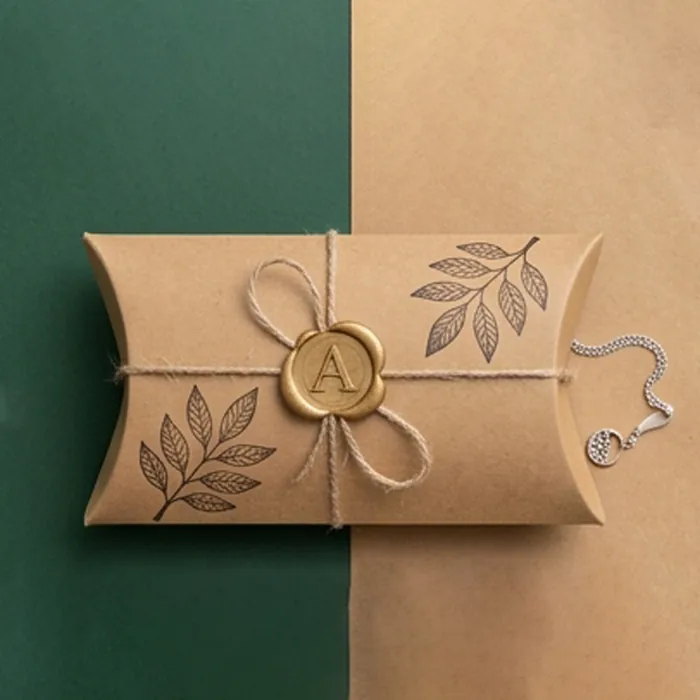
By Size
Medium Pillow Boxes
If a brief does not specify a size, this is the size it means. A medium pillow box sits in the range where the flat central panel is large enough to carry real artwork, the board is stiff enough to hold shape on a shelf, and the pack is still small enough to sit in a countertop display or a standard mailing bag.
It is also the format where the fewest things go wrong. The tuck geometry is comfortable, the board options are wide, and every finishing process we offer is available without a compromise.
- The widest choice of board weights and finishes
- Enough printable area for full artwork, not just a logo
- Fits standard countertop and shelf displays
- Ships in a standard mailing bag with a corrugated option
- Windows, ribbons, handles and inserts all straightforward at this size
Get a quote for medium pillow boxes
Tell us the product, the size and roughly how many. We reply with a written quote and a specification.
Specification at a glance
| Sizing | Custom, cut to your product |
|---|---|
| Board | 14pt to 18pt typically |
| Printing | Full CMYK, spot color, inside print |
| Finishing | Lamination, foil, emboss, spot UV, windows |
| Minimum order | Quoted per specification |
What happens next
-
We read the brief
And come back with questions rather than assumptions if something is missing.
-
You get a written quote
With the specification stated — board, printing, finishing and any tooling.
-
We draw the dieline
Cut to your product, with the usable print area and crease zones marked.
-
Sample, then produce
A physical sample in the final board before a full run, where it is worth it.
How to size a medium box to your product
Getting this right on the first order saves a reprint. It takes about ten minutes.
-
Measure the product at its widest
Not the nominal size — the actual widest point, including any lid, cap or label that stands proud.
-
Add clearance, not slack
Roughly 2–3 mm on each dimension. A pillow box holds by tension, so too much clearance is worse than too little: the product rattles and the pack looks empty.
-
Decide the depth from the tuck
The depth is the dimension the curve has to close over. A deeper box needs a wider tuck radius, which we set on the dieline.
-
Check it against the display
Measure the shelf, hook or countertop unit the box has to sit in before you approve the dieline, not after.
-
Prototype with the real product
We can produce a physical sample in the final board. Put your product in it and close it by hand before signing off.
Products this size handles well
- A standard soap bar with or without a paper wrap
- A small tin or votive candle
- A boxed skincare item — serum, cream, mask sachet set
- A folded pair of socks or a small accessory
- A three to six piece confectionery selection
- A bracelet or watch strap on a printed card
The artwork advantage
This is the smallest size where a full artwork layout is genuinely readable: a logo, a product name, a short description, an ingredient panel and a barcode can all coexist without crowding.
It is worth using that space properly. The most common weakness we see on medium boxes is a design scaled up from a smaller pack, leaving a large empty panel that reads as unfinished rather than minimal.
- Flat central panel large enough for a full front-of-pack layout
- Room for regulatory copy on the reverse without shrinking the type
- Barcode fits within the flat area, away from the curve
- Inside printing is genuinely visible at this scale
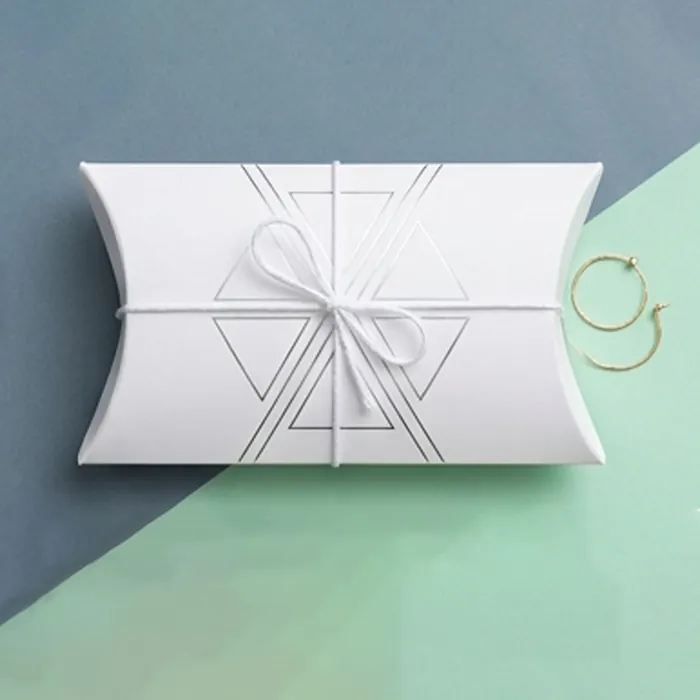
Reference dimensions
Starting points only — the box is cut to your product, not to a catalog.
| Approx. size | Typically holds | Usual board |
|---|---|---|
| 5 × 3 × 1 in | Soap bar, small candle, cosmetic set | 14–16pt |
| 6 × 3.5 × 1.2 in | Larger soap, sock pair, accessory | 16pt |
| 6 × 4 × 1.5 in | Confectionery selection, gift set | 16–18pt |
| 7 × 4 × 1.5 in | Folded textile, multi-piece set | 18pt |
Medium Pillow Boxes: common questions
Answers to what customers most often ask before ordering this specification.
What counts as a medium pillow box?
There is no industry standard. In practice we use it to mean the range where the flat panel carries a full layout and the box still fits a countertop display — roughly five to seven inches on the long edge.
How much clearance should I leave around the product?
Two to three millimetres on each dimension is the usual starting point. A pillow box grips by tension, so a snug fit presents better than a generous one.
Will a medium box post safely on its own?
In solid board, only inside an outer or a padded mailer. If it has to travel alone, we would specify an E-flute construction — see corrugated pillow box options for what changes.
Can I use one box size across several products?
Often yes, and it is a sensible way to reduce cost and stockholding. The limit is fit — a box sized for your largest item will look loose around your smallest.
Does a barcode fit on this size?
Comfortably, provided it sits within the flat panel and away from the crease. We will mark the usable zone on the dieline.
Can I get a sample before committing?
Yes. We produce a physical sample in the final board and size so you can test the fit with your own product. Request it with your quote.
How fast can a medium box be assembled by hand?
Around three seconds on a correctly creased blank. If your team is noticeably slower than that, the crease depth or the tuck geometry is usually the cause rather than the operator.
Will a medium box stack on a shelf?
Flat-lying, yes, up to a few high before the lower packs deform under weight. Where boxes are stacked deep in a display, either specify a heavier board or use a standing format instead.
Can one medium box hold two different products?
It can if their dimensions are close and you add an insert to stop the smaller one moving. Where the two differ noticeably in depth, two sizes usually presents better than one compromise.
What board weight suits a 200 g product?
Typically 16pt in this size band, but weight alone does not decide it — the shape and how the load is distributed matter as much. Send the filled pack weight and we will specify against it.
Related
Others that suit the same brief
Chosen because they solve a nearby problem — a different material, a different scale, or the same product with one structural change.
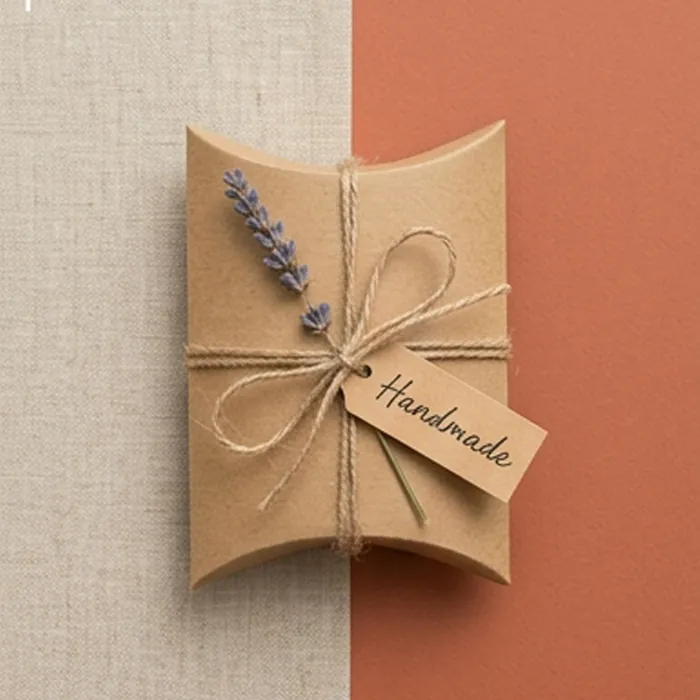
Small Pillow Boxes
Mini formats for samples, jewelry and favors — down to the limit the tuck allows.
View options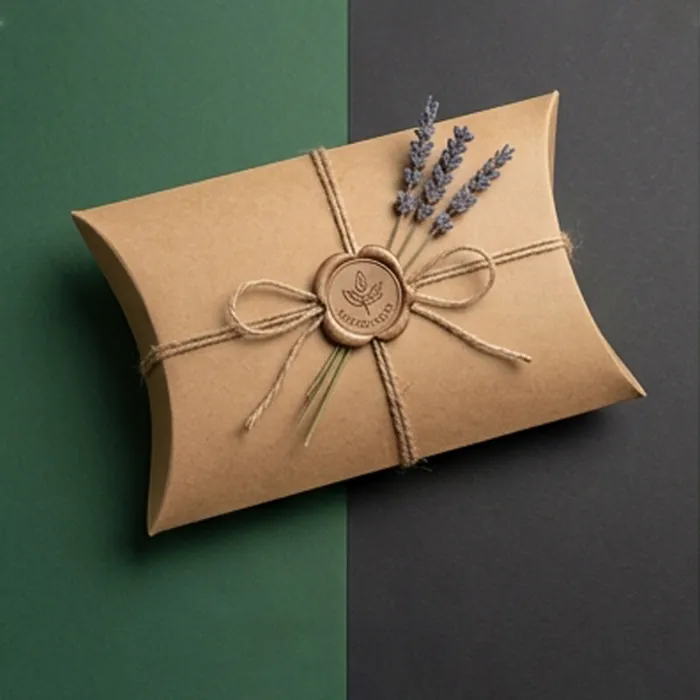
Large Pillow Boxes
Scaled up for apparel and gift sets, with the board weight to stop it bowing.
View options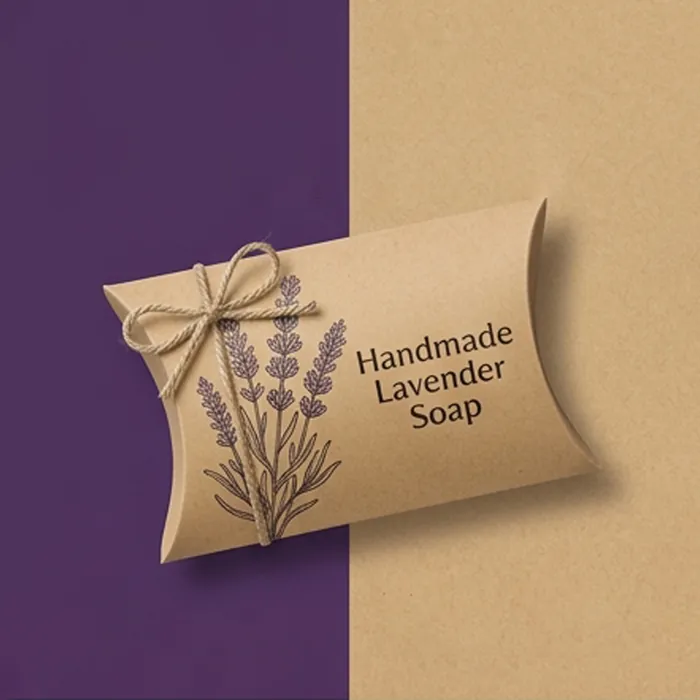
Soap Pillow Boxes
Cut to the bar, with apertures that let the scent through.
View options
Candle Pillow Boxes
Board specified for the weight, with the safety copy planned onto the panel.
View options
Cardboard Pillow Boxes
Coated paperboard with a white printing face — the stock for full-color artwork.
View optionsNext step
Ready to specify medium pillow boxes?
Send the product, the quantity and the date you need it on a shelf. We come back with a written quote, a specification and an honest view of anything in the brief that will not work.