Pillow boxes
Pillow Boxes by Material
Material is the first decision on any packaging brief, and it constrains everything after it. The board you choose determines how the artwork will reproduce, how much weight the pack can carry, whether a window is possible, and what the finished box costs.
There are four material families in pillow box construction and they are genuinely different products rather than price tiers. This page sets out what each one does well, so you can arrive at a quote already knowing which conversation you are having.
Tell us what goes in the box
Not sure which of these suits your product? Describe it and we will recommend a specification rather than a page.
The full group
Each page covers what that specification does well, where it fails, and what it costs you to choose it.
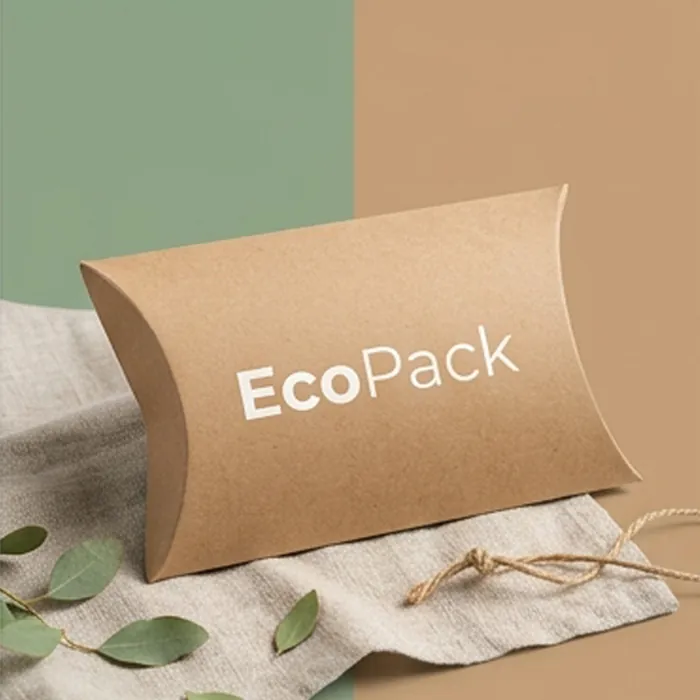
Cardboard Pillow Boxes
Coated paperboard with a white printing face — the stock for full-color artwork.
View options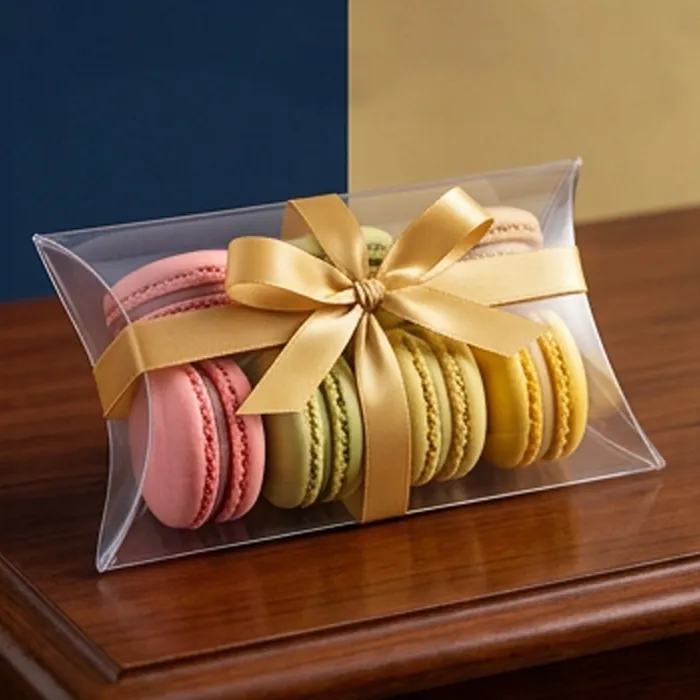
Clear Pillow Boxes
Transparent PET or PVC, for products that sell themselves on sight.
View options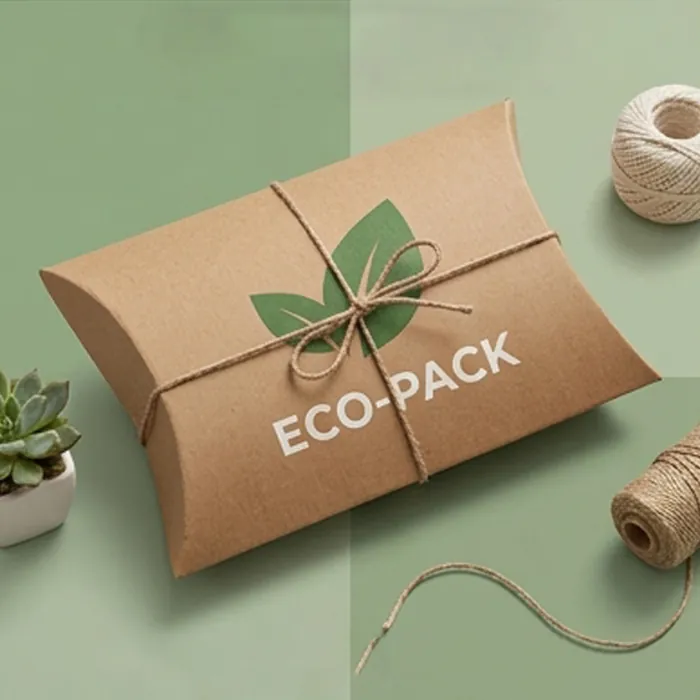
Corrugated Pillow Boxes
Fluted board for weight, protection and packs that travel without an outer carton.
View options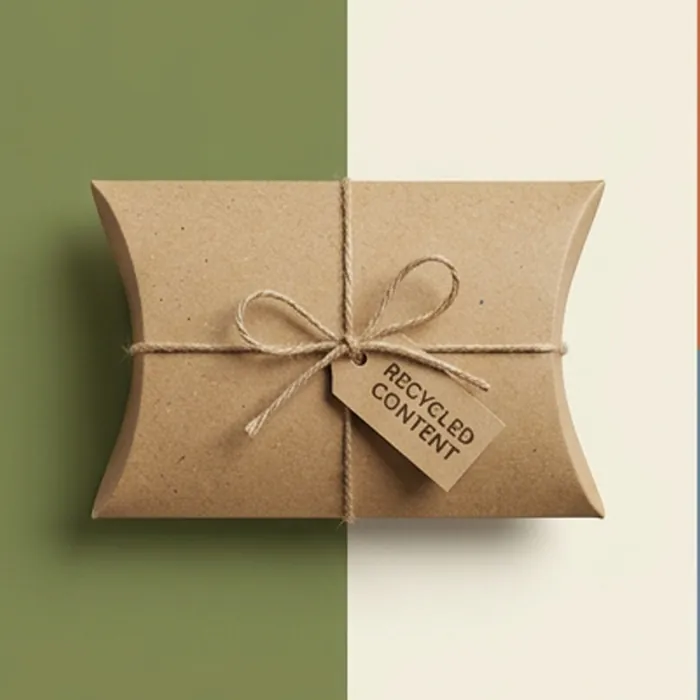
Eco Friendly Pillow Boxes
A paper-only specification: recycled-content board, no laminate, no plastic window.
View options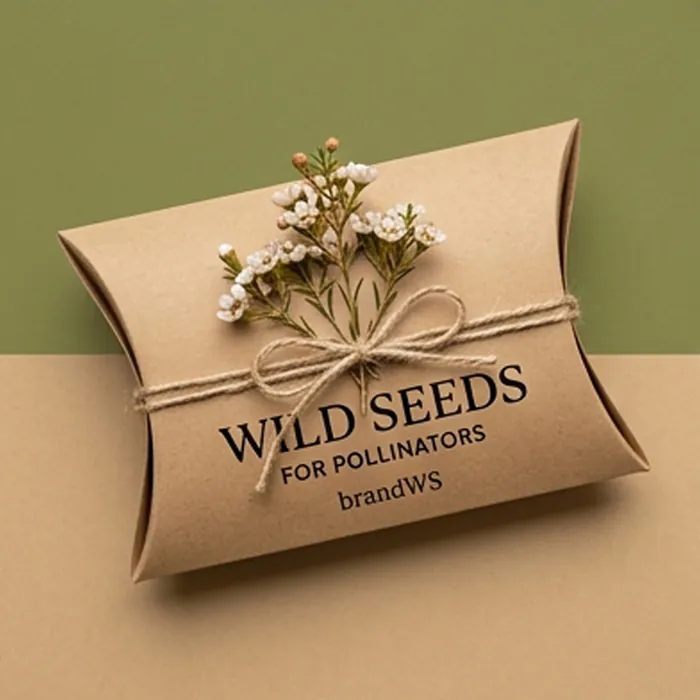
Kraft Pillow Boxes
Natural brown kraft board with a visible fiber texture, printed one or two colors.
View optionsThe four families at a glance
Start here, then read the individual pages for the detail that applies to your product.
| Material | Best for | Watch out for |
|---|---|---|
| Kraft | Natural positioning, one and two-color logos | Pale colors go muddy without a white base |
| Coated paperboard | Full-color artwork, Pantone matching, photography | Nothing structural — it is the general default |
| Corrugated | Weight, fragility, packs that ship unaccompanied | Ribbing on large printed solids unless litho-laminated |
| Clear PET | Products that sell on appearance | Almost no branding surface without a band or label |
Weight is a separate decision
Within each family there is a range of weights, and the right one comes from the contents rather than the dimensions. A box sized for a soap bar and a box the same size holding a candle need different boards, because the candle is several times heavier.
This is the most common source of disappointment on a first order, and it is entirely avoidable. Tell us the filled weight when you request a quote and the board will be specified against it.
Questions that decide the material for you
- Does the artwork include photography or a large area of pale color?
- What does the filled pack weigh, and how far does it travel?
- Does the product need to be visible before purchase?
- Is recyclability part of the brief, or the positioning, or neither?
- Will the box ship on its own or inside an outer carton?
By Material: common questions
Which material is cheapest?
At the same weight and quantity, kraft and coated paperboard are close. The cost difference in a real quote usually comes from what you print and how you finish it rather than from the sheet itself.
Can I mix materials across a range?
Yes, and many brands do — a coated board for the flagship line, kraft for a natural sub-brand. Running them in one order is more efficient than several separate ones.
What is the most protective option?
E-flute corrugated by a clear margin. It is the only pillow box construction we would recommend for a fragile product traveling without an outer carton.
Is there a plastic-free option?
Yes — an unlaminated board with no film window and paper-based closures. What it can honestly claim is set out on our recyclable specification page.
Next step
Send us the product, not a box size
Send the product, the quantity and the date you need it on a shelf. We come back with a written quote, a specification and an honest view of anything in the brief that will not work.