Design
When a Window Earns Its Place
A window is not a decoration, it is a merchandising decision, and it is one of the few packaging features that can make a product sell worse rather than better.
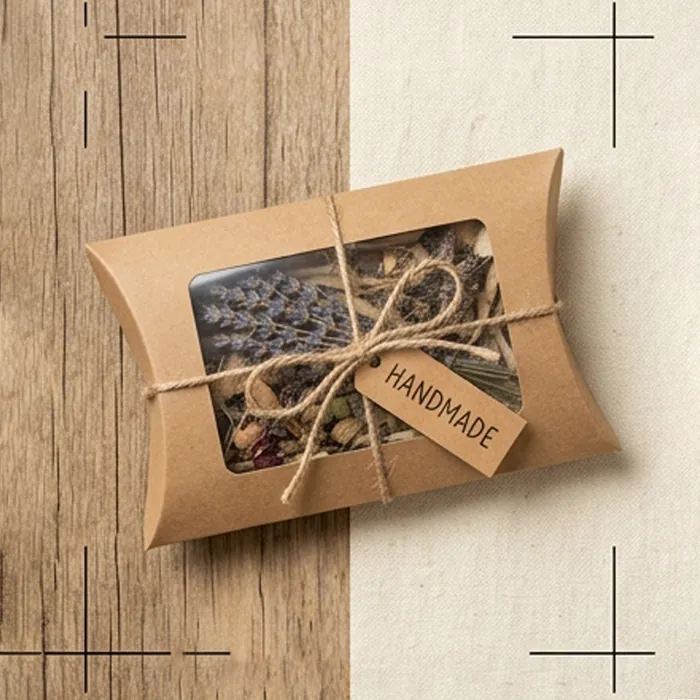
The question a window answers
A window exists to answer one question a customer is asking at the shelf: what is actually in there? If they are asking it, showing them is powerful. If they are not, the window is costing you print area, adding a die and a film patch, and reducing the pack's recyclability for nothing.
So the first thing to establish is whether appearance is part of the purchase decision. For macarons, bath bombs, patterned socks and confectionery it plainly is. For a supplement, a lip balm or a sealed sachet it plainly is not.
A window helps when
- The product is visually attractive and varies between options
- The customer needs to confirm a count or a color
- Your range has many similar variants distinguished by appearance
- The product itself is more persuasive than any photograph of it
- You want to avoid bespoke artwork for every design in a range
A window hurts when
- The product looks better in a photograph than in the pack
- Appearance varies between batches in ways you cannot control
- The item is fragile or perishable and the window exposes it
- The pack needs the space for mandatory copy
- Recyclability is a stated part of your positioning
Film or no film
A film window protects the contents and is necessary for anything loose or fine. It also has to be separated from the board to recycle the pack cleanly, and most people will not do that.
An open die-cut aperture keeps the pack fully paper-based and shows the product just as well, provided the contents are wrapped or solid enough to be exposed. For soap in particular it is actively better, because it lets the scent reach the customer. The options are set out on our window pillow box page.
If you do use one, get these right
-
Show the best part, not the largest part
A window over the least interesting face of a product is a wasted aperture.
-
Size it so the product fills it
A window with empty space around the product reads as an under-filled pack.
-
Keep it clear of the creases
A window reaching into the tuck creases the film and tears the board. We mark the usable zone on the dieline.
-
Check what it shows after settling
The product settles in transit. What the window shows on arrival is not always what it showed when packed.
Three ways to show a product
A window is not the only answer to "what is inside", and it is not always the best one.
Die-cut window
- Shows the real product, not a representation
- Works across a range with no artwork per variant
- Adds a die, a film patch and an application step
- Reduces the pack's paper recyclability if filmed
Printed photography
- Complete control of what the customer sees
- Hides batch variation, which cuts both ways
- Needs new artwork for every variant
- Keeps the whole panel available for design
A clear pack
- Maximum visibility, minimum branding surface
- Branding moves to a band, label or ribbon
- Cheapest route to a colorful shelf presence
- Plastic, with the recyclability trade-off that follows
Questions this raises
Does a window add much cost?
A die and a film patch, plus the application step. It is not large per unit at volume, but it is not free, and it is worth being sure the window is doing a job.
Can I have a window without plastic?
Yes — an open die-cut aperture with no film. It works where the contents are wrapped or solid, and it keeps the pack fully paper-based.
Will a window weaken the box?
Any aperture reduces stiffness. On a small or medium window in a correctly weighted board it is not noticeable; a very large one needs a heavier stock.
Can the window be a custom shape?
Yes. The die is cut to your outline, so a circle, an arch or a logo silhouette all cost the same once the tooling exists.