Structure
Packaging Inserts and Internal Structure
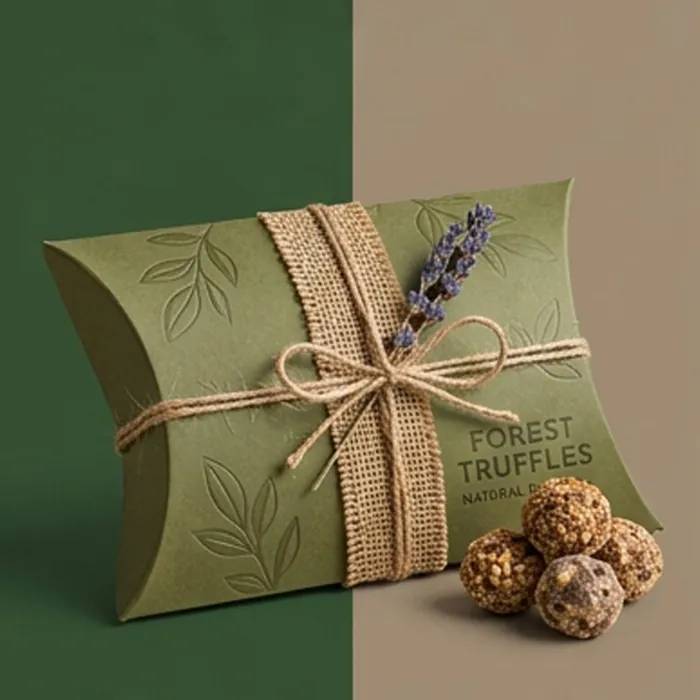
A pillow box holds its contents by tension, which works well for something soft and badly for anything that can slide. The insert is what turns a container into a presentation, and on several product categories it matters more than the box.
What an insert is actually for
Two things: stopping movement, and presenting the contents. Movement is the practical one — a product that slides scuffs itself, scuffs the board, and arrives rearranged. Presentation is the commercial one, and it is the difference between a piece lying in a box and a piece offered in a box.
Both are cheap to solve relative to their effect. An insert is typically a small fraction of the cost of the box it sits in, and on categories like jewelry, confectionery and lashes it is the single highest-return decision available.
Insert types and what they solve
| Type | Solves | Typical use |
|---|---|---|
| Die-cut tray with recesses | Pieces touching or moving | Truffles, macarons, pralines |
| Retaining card with slots | A piece sliding or tangling | Chains, bracelets, watch straps |
| Punched display card | Presenting a small item flat | Earrings, enamel pins, keyrings |
| Folded cradle | A cylinder rolling | Candles, jars, tubes |
| Divider | Items colliding with each other | Multi-packs, sets, variety boxes |
| Flat pad | Depth taken up so nothing shifts | Flat goods, cards, sheets |
How inserts are sized
This is why we quote them with the box rather than separately:
- The insert fits the finished internal size, not the flat dieline dimension
- Board thickness reduces the internal space, and E-flute reduces it considerably
- A tray recess must hold the item with light contact, not compression
- The insert should fill the footprint so it cannot slide within the box
- Recesses have to stay clear of the crease zones at each end
Board or formed plastic
A die-cut board insert keeps the pack fully paper-based, costs less and is adequate for most products. A formed plastic tray holds a more precise shape, which matters for items with a defined curve — a lash on a former, for example, or a molded chocolate.
The choice is usually decided by whether the shape has to be exact. Where it does not, board is the better answer on cost and on recyclability.
Products that almost always need one
- Chains and bracelets, which tangle without a retaining card
- Truffles and pralines, which scuff each other without a tray
- False lashes, where the curl flattens without a raised bed
- Macarons, which crack without a recess and a depth clearance
- Multi-item sets, which look careless without defined positions
Questions this raises
Do you supply inserts as well as boxes?
Yes, and we quote them together. The insert has to be cut to the finished internal size, which is not the same as the flat dieline dimension, so they cannot sensibly be specified separately.
How much do inserts add to the cost?
Typically a small fraction of the box, depending on complexity. On categories where movement damages the product, it is usually the cheapest problem you can solve.
Board or plastic tray?
Board unless the shape has to be exact. Board is cheaper, keeps the pack paper-based, and is adequate for most contents. A formed tray suits items with a precise curve.
Can the insert be printed?
Yes, and it is worth doing. It is one of the most-seen surfaces in the pack and printing it costs very little on a component already being made.
Will an insert make the box bigger?
Slightly, because it occupies internal space. We account for that when sizing, which is another reason the insert and the box are specified together.