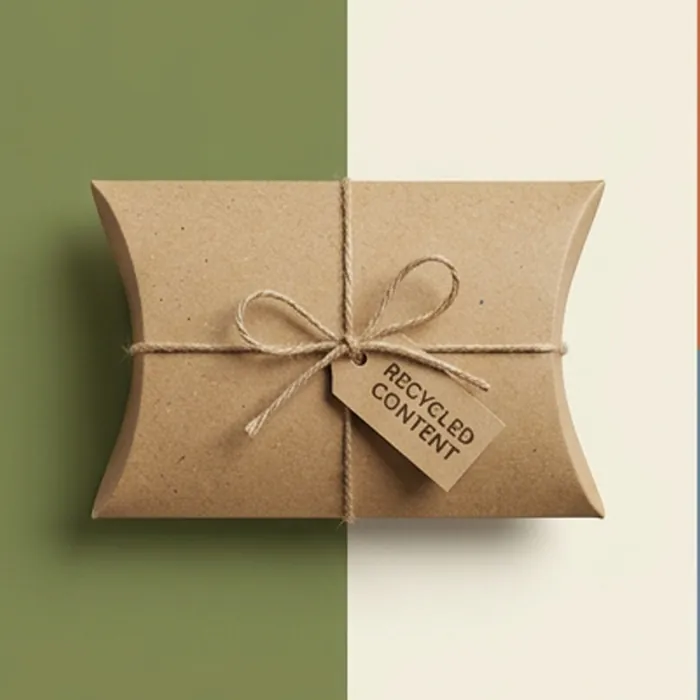
By Material
Eco Friendly Pillow Boxes
"Eco-friendly" is a claim, and most of the time it is made loosely. What we can do is build a specification that stands up: recycled-content or unbleached board, no plastic laminate, no PET window, water-based or soy-based inks where the press supports it, and paper-based closures instead of adhesive tape.
That specification is genuinely more recoverable in a household paper stream than a laminated, windowed carton. What it is not, unless you hold the relevant certification yourself, is certified compostable, certified biodegradable, or FSC-marked. We will build the box; the claims on it have to be yours to make.
- Recycled-content and unbleached board options
- No laminate film — uncoated or varnish-only finishing
- Paper-based windows omitted or replaced with a die-cut aperture
- Jute, cotton or paper twine instead of plastic closures
- Blind deboss as a plastic-free alternative to foil
Get a quote for eco friendly pillow boxes
Tell us the product, the size and roughly how many. We reply with a written quote and a specification.
Specification at a glance
| Board | Recycled-content kraft or coated paperboard, unbleached options |
|---|---|
| Coating | Uncoated, or water-based varnish |
| Windows | Open die-cut aperture, or omitted |
| Closures | Jute, cotton or paper twine; paper seals |
| Decoration | Blind deboss, emboss, single-color print |
| Claims | Factual material statements only — no unverified certification marks |
What happens next
-
We read the brief
And come back with questions rather than assumptions if something is missing.
-
You get a written quote
With the specification stated — board, printing, finishing and any tooling.
-
We draw the dieline
Cut to your product, with the usable print area and crease zones marked.
-
Sample, then produce
A physical sample in the final board before a full run, where it is worth it.
What we change to make a pack more recoverable
Each of these is a real, checkable change to the specification rather than a label. They can be applied individually — some brands take three of the five.
-
Drop the laminate
A plastic film bonded to board is the single biggest barrier to paper recycling. Replacing it with an uncoated finish or a water-based varnish keeps the pack in the paper stream.
-
Remove the film window
A PET window has to be separated by hand to be recovered. An open die-cut aperture keeps the product visible with no plastic at all, where the contents allow it.
-
Move to recycled-content board
Post-consumer recycled board is available in both kraft and coated grades. The white point is grayer, which we will show you on a proof before you sign it off.
-
Swap the closure
Jute, cotton or paper twine and a paper sticker replace plastic tape and elastic. On a pillow box the tuck already does most of the work, so this is usually straightforward.
-
Deboss instead of foil
Metallic foil is a thin plastic-backed layer. A blind deboss gives you a tactile brand mark with nothing added to the sheet.
The claims we will and will not print
We will print factual, verifiable statements: "recycled paperboard", "unlaminated", "please recycle with paper". These describe the specification we actually supplied.
We will not print FSC or PEFC marks unless the chain of custody covers your order, and we will not print "compostable", "biodegradable" or a certification logo you do not hold. Those claims are regulated in the United States, the United Kingdom, Canada and Australia, and a supplier who prints them for you without asking is creating a problem for your brand, not solving one.
If sustainability is central to your positioning, send us the wording you intend to use and we will tell you which parts the specification supports. It is a short conversation and it saves an expensive reprint.
What you give up, honestly
A plastic-free specification has real trade-offs. They are worth knowing before you commit:
- Less scuff resistance — an unlaminated box shows handling marks sooner
- No moisture barrier at all, so damp storage is a genuine risk
- Duller, warmer color reproduction on recycled and uncoated stock
- No high-gloss or soft-touch finish options
- A slightly grayer white if you specify high recycled content
Eco Friendly Pillow Boxes: common questions
Answers to what customers most often ask before ordering this specification.
Are these boxes compostable?
We do not claim that. Uncoated paperboard will break down under the right conditions, but "compostable" is a certified standard with specific test criteria, and unless a certified material has been specified and paid for, the claim is not available to you.
Can I get an FSC-certified pillow box?
Certified stock can be sourced, but printing the FSC mark requires chain-of-custody certification that covers the whole route to your order. Ask us at quote stage and we will tell you plainly whether it is achievable for your specification and quantity.
How much recycled content can the board have?
Boards ranging from partial to 100% post-consumer recycled content are available in kraft and in coated grades. The higher the content, the grayer and more variable the sheet, which matters most if your design has large white areas.
Is a kraft box automatically eco-friendly?
No. Kraft is unbleached, which is a real difference, but a kraft box with a gloss laminate and a PET window is no easier to recycle than a coated one. The finishing matters more than the base stock. Our page on natural kraft pillow packaging covers the material itself.
Do soy-based inks make a meaningful difference?
They reduce the volatile solvent content of the ink and de-ink slightly more readily during recycling. It is a genuine but modest improvement, and it depends on the press — we will confirm what is available for your run rather than assuming.
Will an unlaminated box survive retail handling?
For a product that sells through reasonably quickly, yes. For a box that sits on an open shelf being picked up repeatedly for months, expect visible wear on the edges. A water-based varnish helps without adding a plastic film.
Can I put a recycling symbol on the box?
A generic recycling loop is not a certification and is used widely, but several markets now expect any on-pack recycling instruction to be accurate for the local stream. Tell us the wording and the markets and we will say which parts the specification supports.
Does a plastic-free box cost more?
Usually slightly less, because you are removing a lamination step and a film window rather than adding anything. Recycled-content board can carry a small premium depending on grade and availability.
How much thinner is the environmental benefit if I keep the foil?
A small foil mark is unlikely to stop a board being recovered; a fully metallised or heavily foiled panel will. If you want the specification to be defensible, a blind deboss achieves a similar visual weight with nothing added to the sheet.
Can you supply the boxes without shrink wrap?
Yes. Bundles can be banded with paper tape instead, which removes the last piece of plastic from the delivery. It gives the flat stock less moisture protection in transit and storage, so it is a trade rather than a free win.
Related
Others that suit the same brief
Chosen because they solve a nearby problem — a different material, a different scale, or the same product with one structural change.
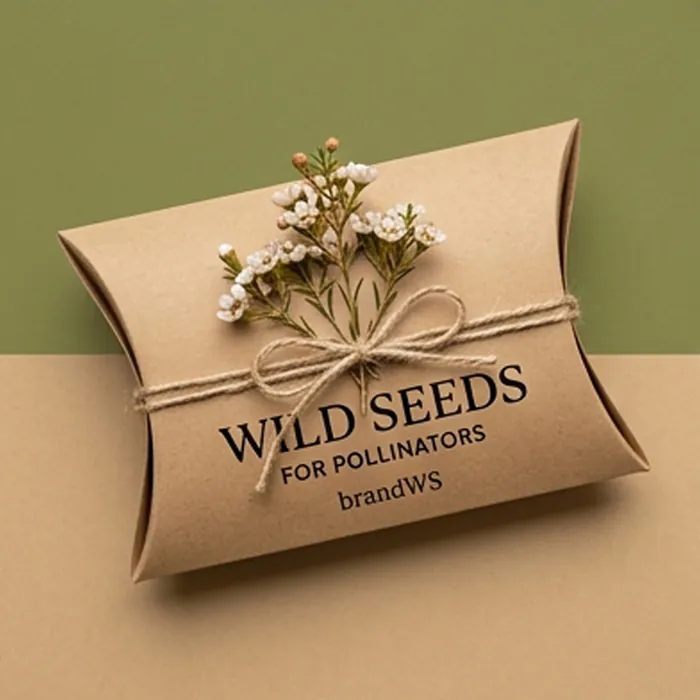
Kraft Pillow Boxes
Natural brown kraft board with a visible fiber texture, printed one or two colors.
View options
Corrugated Pillow Boxes
Fluted board for weight, protection and packs that travel without an outer carton.
View options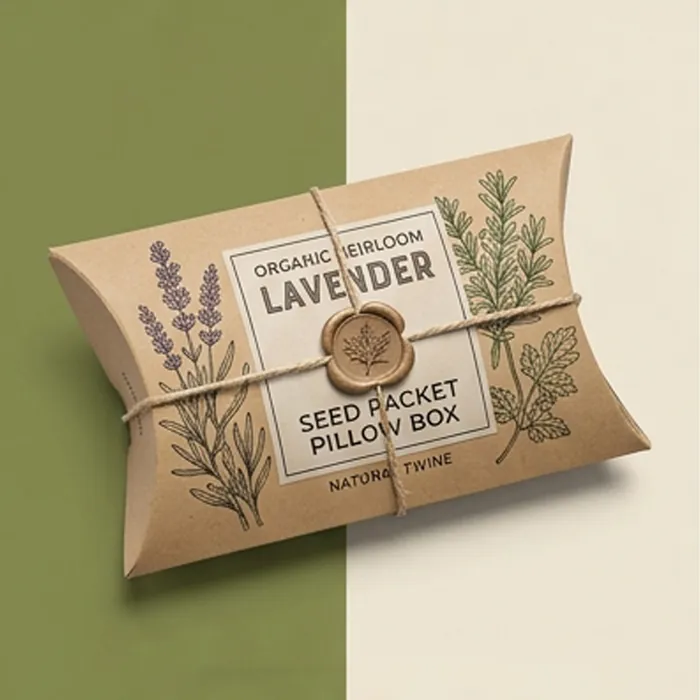
Seed Packet Pillow Boxes
Uncoated stocks that take a pen, with sowing information planned into the panel.
View options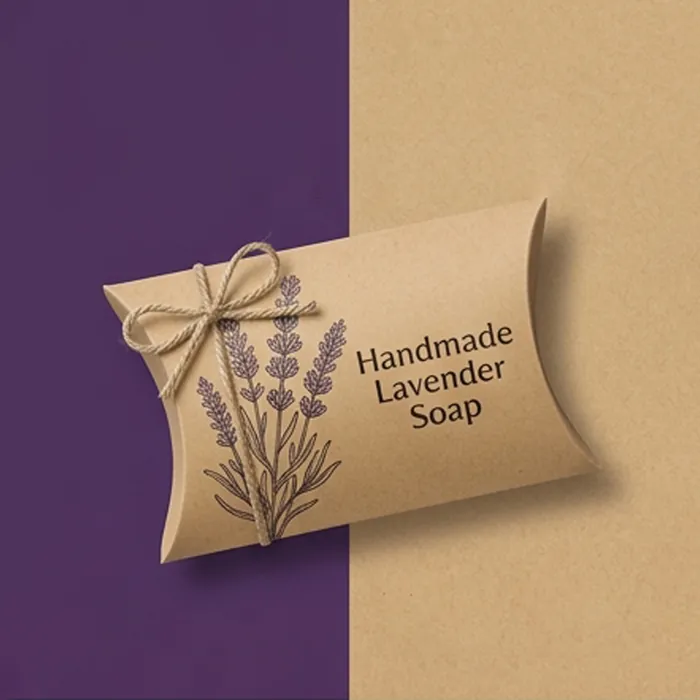
Soap Pillow Boxes
Cut to the bar, with apertures that let the scent through.
View options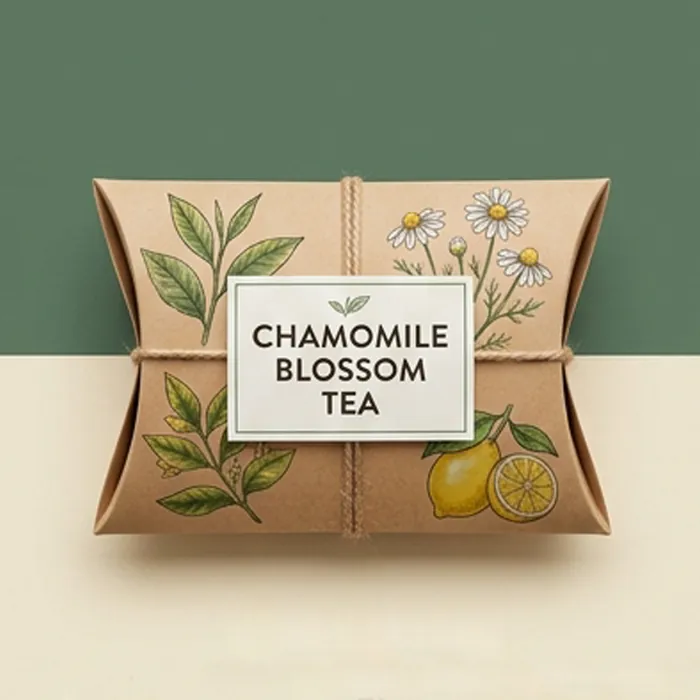
Tea Pillow Boxes
Aroma-aware packs for bags, sachets and loose-leaf samples.
View optionsNext step
Ready to specify eco friendly pillow boxes?
Send the product, the quantity and the date you need it on a shelf. We come back with a written quote, a specification and an honest view of anything in the brief that will not work.