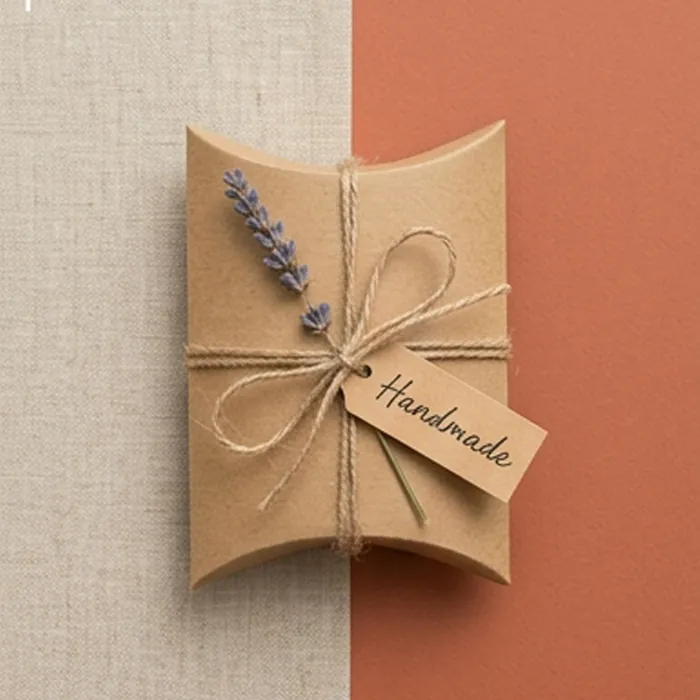
By Size
Small Pillow Boxes
Small pillow boxes are the format most brands underestimate. They look simple, and they are the hardest of the range to get right, because as the box shrinks the curved end tuck has less material to work with and the tolerances that were comfortable at retail size become tight.
Below roughly two inches across, the end curve stops holding reliably on a standard board — the pack springs open in a display bin or a mailing bag. The fix is not a heavier board, which makes the problem worse, but a lighter one with a wider tuck radius. That is a specification decision, and it is the main reason to talk to us about a small box rather than order one blind.
- Custom sizes from sachet scale upward
- Lighter board weights specified deliberately for a reliable tuck
- Single-color logo printing, which suits the panel size
- Hang holes and euro slots for peg and countertop display
- Supplied flat — a thousand small boxes takes very little storage
Get a quote for small pillow boxes
Tell us the product, the size and roughly how many. We reply with a written quote and a specification.
Specification at a glance
| Sizing | Cut to your product; no fixed catalog sizes |
|---|---|
| Board | 12pt to 14pt typically, chosen for tuck reliability |
| Printing | Spot color, CMYK, foil, blind deboss |
| Add-ons | Hang holes, twine, printed swing tags, insert cards |
| Minimum order | Quoted per specification |
What happens next
-
We read the brief
And come back with questions rather than assumptions if something is missing.
-
You get a written quote
With the specification stated — board, printing, finishing and any tooling.
-
We draw the dieline
Cut to your product, with the usable print area and crease zones marked.
-
Sample, then produce
A physical sample in the final board before a full run, where it is worth it.
What changes when a box gets small
Three things stop scaling linearly. The tuck radius has to grow relative to the box, so the proportions of the dieline change rather than simply reducing. Board weight has to come down, because a stiff board at small scale fights the curve instead of following it. And printed detail has to simplify, because a logo that reads at three inches becomes a smudge at one.
None of these are difficult; they just have to be decided rather than inherited from a larger box. Send us the product and we will draw the dieline around it.
What fits a small pillow box well
- A pair of stud earrings on a printed card
- Sample sachets, single-serve tea or coffee
- Lip balms, solid perfumes, sample-size cosmetics
- Seed packets and small dried goods
- Wedding favor confectionery — two or three pieces
- Gift cards, vouchers and membership cards
Formats we are asked for repeatedly
These are common starting points rather than a stock range. Every box we make is cut to the product, so treat these as reference sizes for a conversation.
| Approx. size | Typically holds | Usual board |
|---|---|---|
| 2.5 × 1.5 × 0.6 in | Stud earrings, a single sachet | 12pt / 250 gsm |
| 3 × 2 × 0.8 in | Lip balm, ring box, small favor | 12–14pt |
| 3.5 × 2.5 × 0.9 in | Two or three chocolates, a gift card | 14pt / 300 gsm |
| 4 × 2.5 × 1 in | A soap sample, a small candle tin | 14pt |
Printing at small scale
The printable face of a small pillow box is smaller than it looks on the dieline, because the curved ends and the crease zone are effectively unusable. A logo needs to sit within the flat central panel to survive.
That constraint pushes small-box design toward a single confident mark rather than a layout — which is usually a better outcome anyway. A one-color logo on kraft, a foil monogram on black, a debossed initial: these all work at this scale where a full artwork layout does not.
- Keep artwork inside the flat central panel
- Simplify fine detail — hairlines disappear at this size
- One color usually looks better than four at small scale
- A printed swing tag adds copy space without crowding the box
Small Pillow Boxes: common questions
Answers to what customers most often ask before ordering this specification.
How small can you actually make a pillow box?
Around two inches across is where the curved tuck starts to become unreliable on standard board. Smaller is possible with a lighter stock and a revised tuck radius, and we will tell you honestly when a different structure would serve you better.
Why do my small boxes keep popping open?
Usually the board is too heavy for the size. A stiff sheet resists the curve and pushes the tuck out. Dropping a weight and widening the tuck radius almost always fixes it.
Can a small box still have a window?
Yes, though the aperture has to stay clear of the crease zone, which leaves less room than you would expect. We will show you the usable area on the dieline before you design into it.
Is there a price advantage to going smaller?
Some, since you use less board and fit more on a press sheet — but the setup, tooling and printing costs are the same. Halving the size does not halve the price.
Do small boxes need an insert?
For jewelry, usually yes: a printed card holds a chain or a pair of studs in position so they are presented rather than loose. It is quoted with the box.
What is the difference between this and a medium pillow box?
Mostly the board weight and the tuck geometry rather than just the dimensions. The medium pillow box format is the general retail workhorse and is specified quite differently.
How many small boxes fit in a shipping carton?
Far more than most people expect, because they ship flat. We state the count per bundle and per carton on the specification and hold it constant across reorders so your stock counts stay reliable.
Can a small box carry a barcode?
Usually, but the quiet zones either side of the bars need protecting and the flat panel is smaller than the dieline suggests. We mark the usable area so the code is not placed where a scanner will struggle.
Are small boxes harder to fold?
They are fiddlier, and a board that is too heavy makes it markedly worse. Specifying a lighter stock for a small format improves both the closure and the assembly speed.
Is there a minimum size below which printing stops working?
Printing itself keeps working; legibility is the limit. Below about 5 point, fine or light type breaks up, and a logo with hairlines loses its detail long before the box gets too small to make.
Related
Others that suit the same brief
Chosen because they solve a nearby problem — a different material, a different scale, or the same product with one structural change.
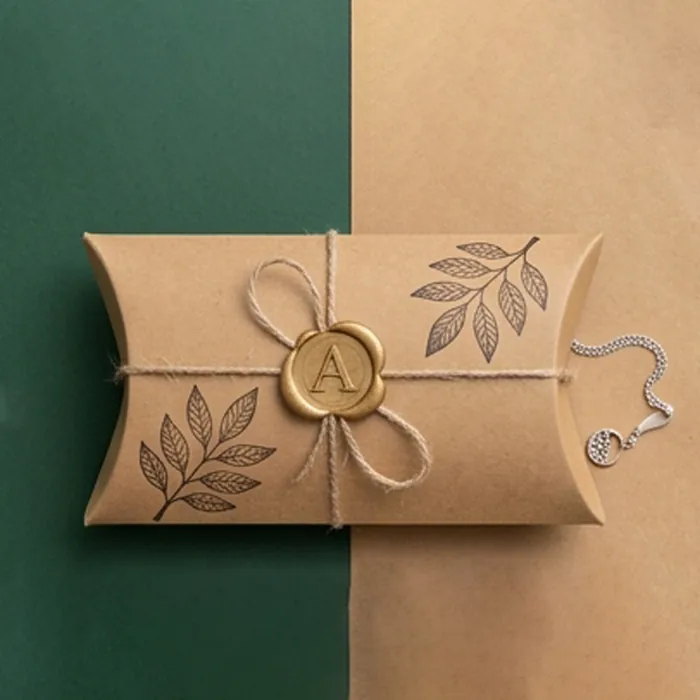
Medium Pillow Boxes
The general retail size: big enough to brand properly, small enough to merchandise.
View options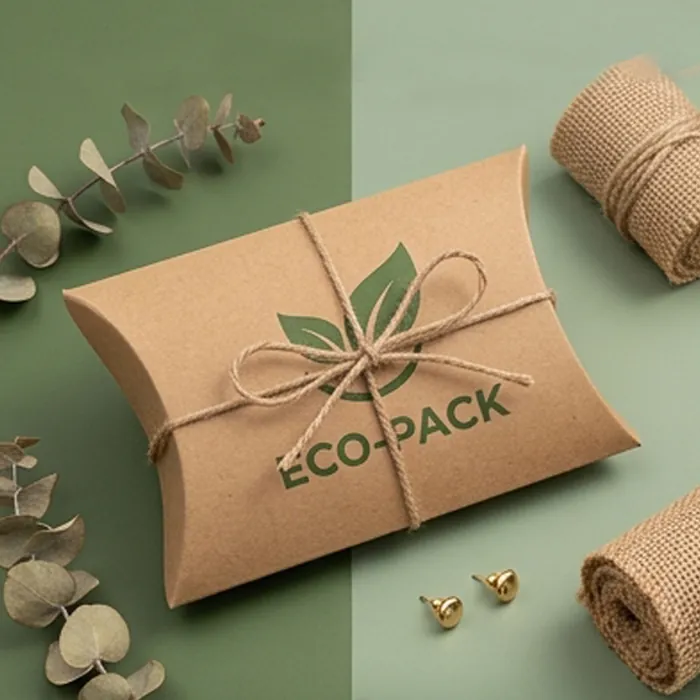
Earring Pillow Boxes
Punched display cards inside a small box — the standard earring presentation.
View options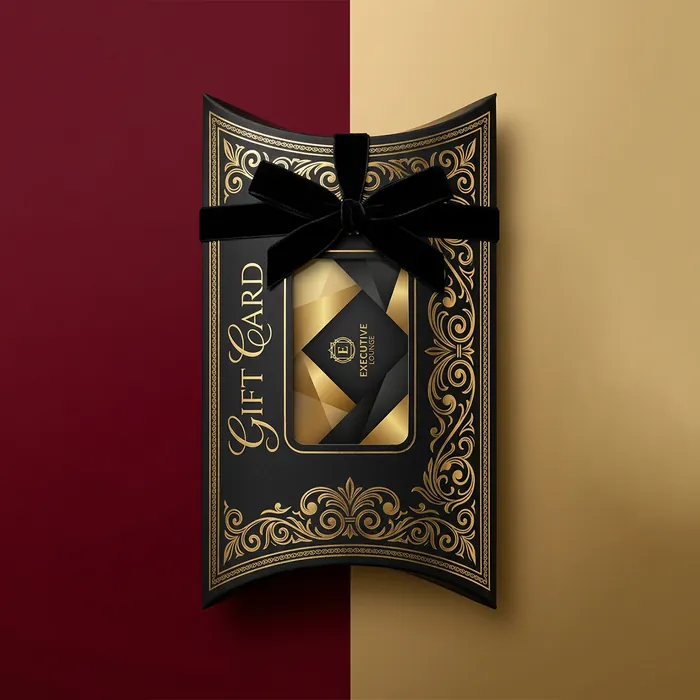
Gift Card Pillow Boxes
Slim formats with a retaining slot and room for a handwritten message.
View options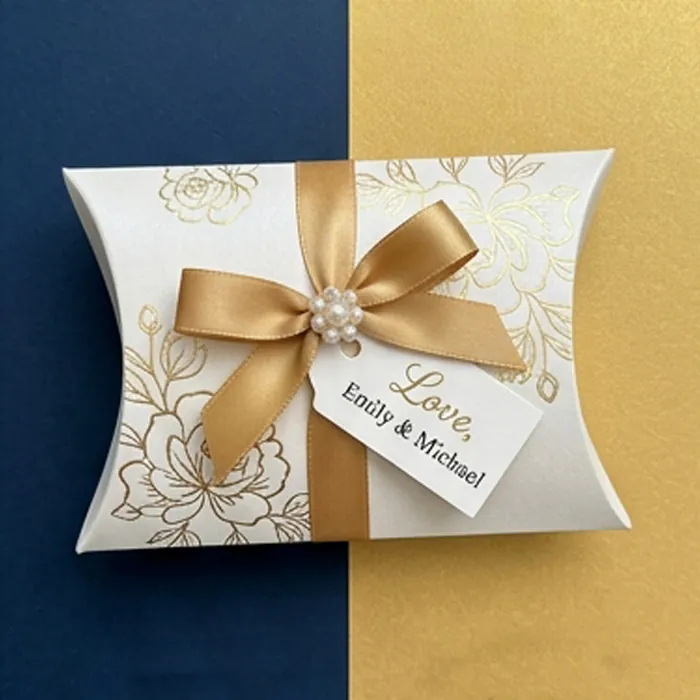
Wedding Favor Pillow Boxes
Small, personal and often named per guest — the most detail-sensitive box we make.
View options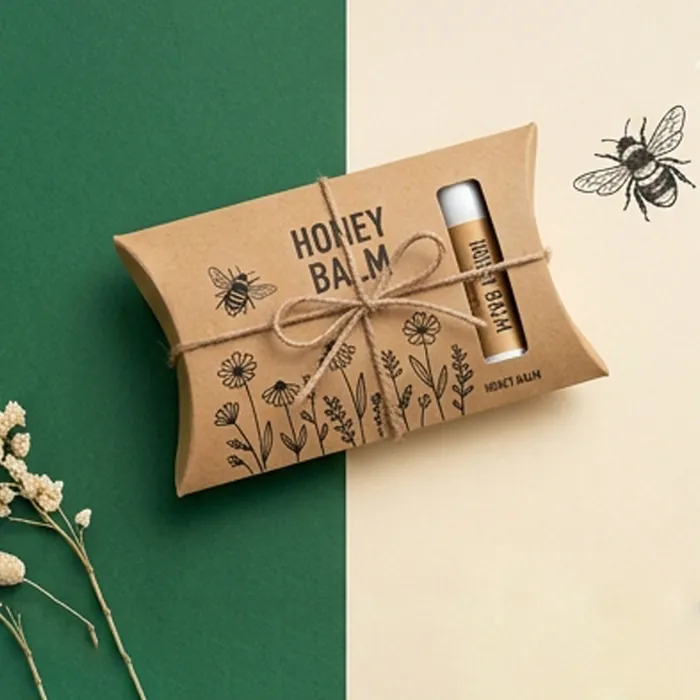
Lip Balm Pillow Boxes
Sized to the tube, with the ingredient copy solved on a very small panel.
View optionsNext step
Ready to specify small pillow boxes?
Send the product, the quantity and the date you need it on a shelf. We come back with a written quote, a specification and an honest view of anything in the brief that will not work.