Printing
Custom Printed Pillow Boxes
Printed, branded, personalized — they all mean the same thing, which is a pillow box carrying your artwork. What actually varies is the method: whether a color is a mixed spot ink or built from four process inks, and whether it is printing onto a white sheet or over a brown or dark one.
Those two decisions account for most of what goes right and wrong in printed packaging, and they are worth making deliberately rather than by default.
Send us your artwork
Or just describe it. We will tell you what will reproduce well and what will not before you commit.
Spot or process — the decision that matters most
Process printing builds every color from cyan, magenta, yellow and black. It reproduces photography and is the right choice when a design has many colors. Its weakness is consistency: four inks running at once vary between presses and between runs.
A spot color is a single ink mixed to a formula. It lays down flat across a large panel, reaches shades process cannot, and reproduces identically every time. On a design with one to three colors it is usually cheaper as well.
Almost every complaint about a brand color changing between orders traces back to a process build. If a color has to stay exact, specify it as a spot.
- Bright pinks, vivid oranges and saturated violets are outside the CMYK range entirely
- Pale tints show press variation more than dark solids — specify them as solid spots
- Metallics are foils, metallic inks or metallized board, not process colors
- White is an opaque spot ink; there is no white in standard CMYK
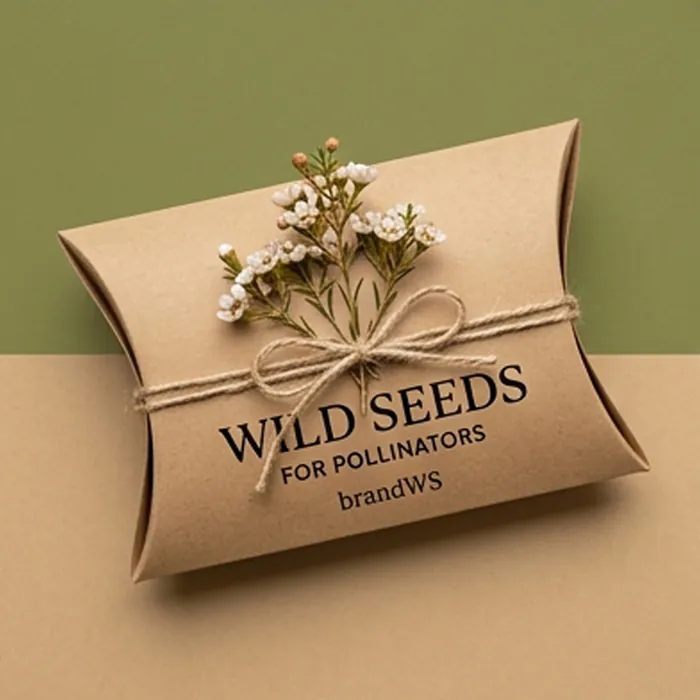
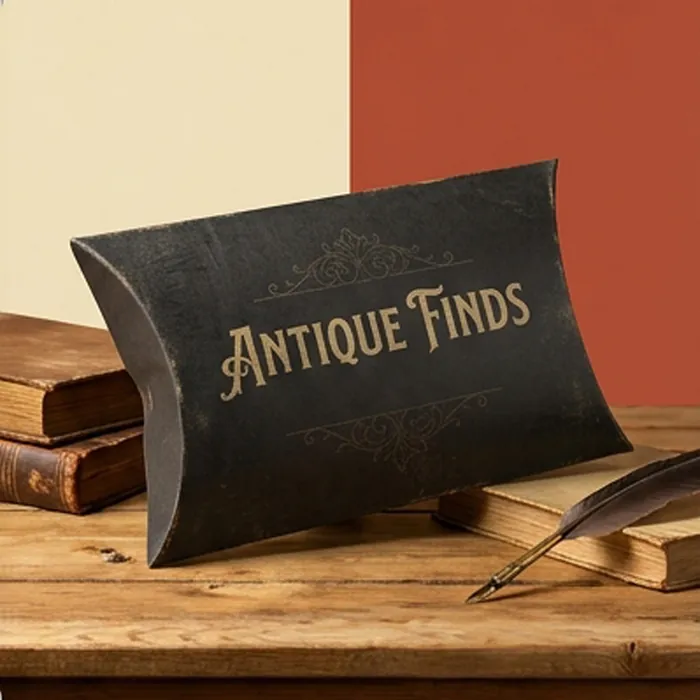
Printing over a colored ground
Ink is transparent. On a white sheet that is invisible, because the paper supplies the brightness. On kraft or a dark board every color becomes a glaze over that ground.
| Artwork color | On white board | On kraft or dark board |
|---|---|---|
| Dark colors | Accurate | Close, slightly warmer and duller |
| Mid tones | Accurate | Shifted toward the board color |
| Pale and pastel | Accurate | Disappears without an opaque white base |
| White | Unprinted board | Must be an opaque spot white |
| Photography | Reproduces well | Muddy; use a coated or bleached stock |
The full behavior of each stock is covered on our kraft board page.
Stocks to print on
The grounds we print onto most
Each page covers what that stock does to your artwork, not just what it is made of.
Kraft Pillow Boxes
Natural brown kraft board with a visible fiber texture, printed one or two colors.
View options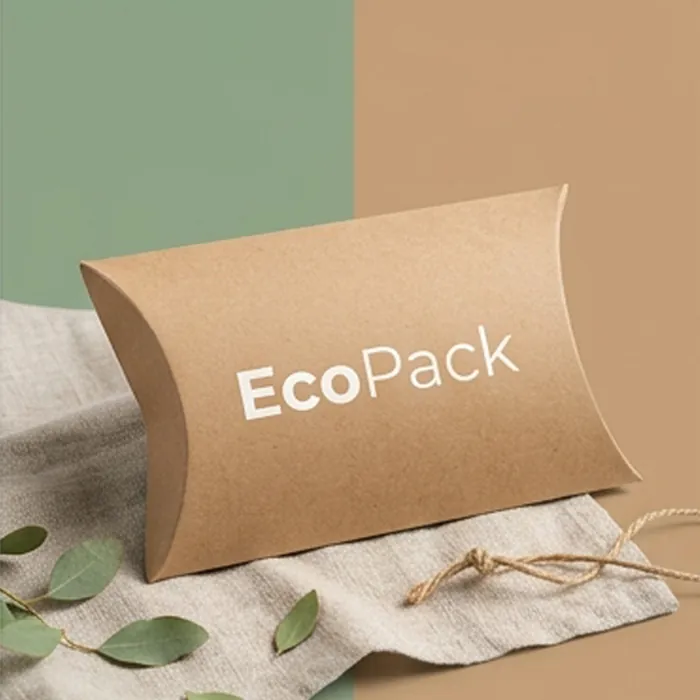
Cardboard Pillow Boxes
Coated paperboard with a white printing face — the stock for full-color artwork.
View options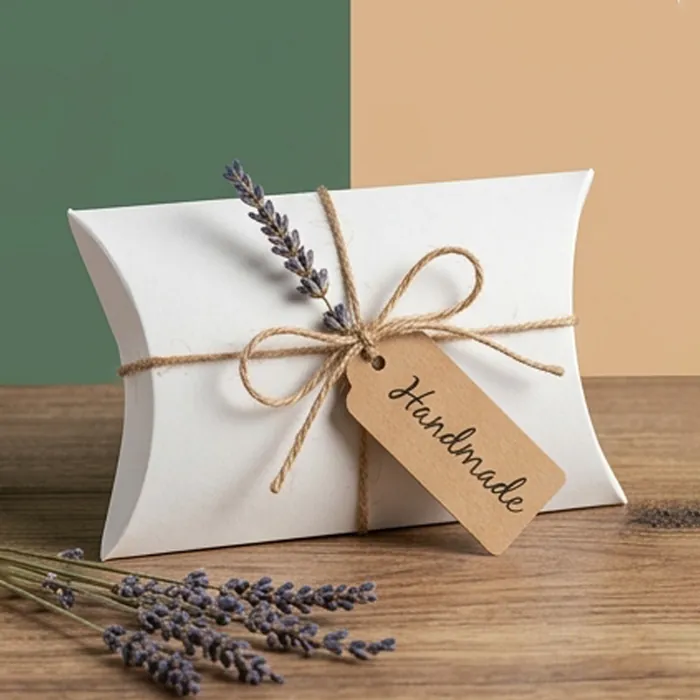
White Pillow Boxes
A clean white face — plain for minimal brands, or the best base for color.
View options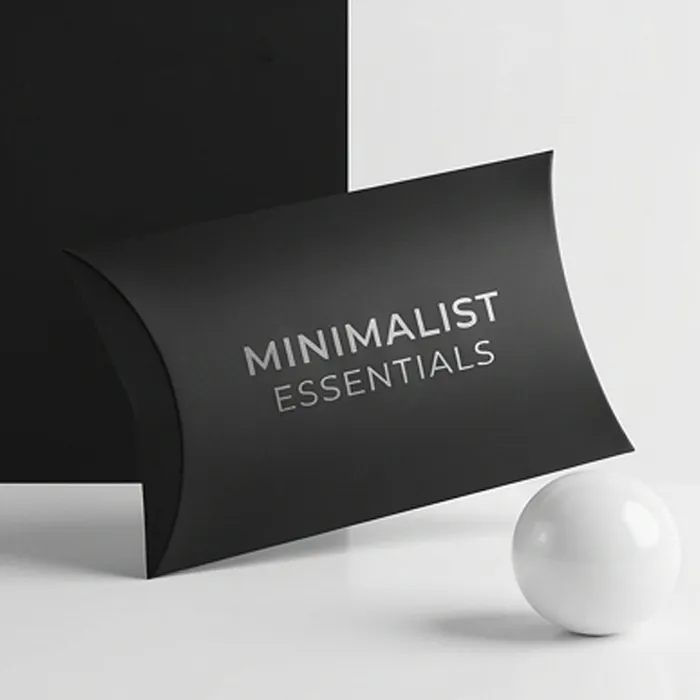
Black Pillow Boxes
Deep matte black with foil or spot gloss — the shortest route to a premium read.
View options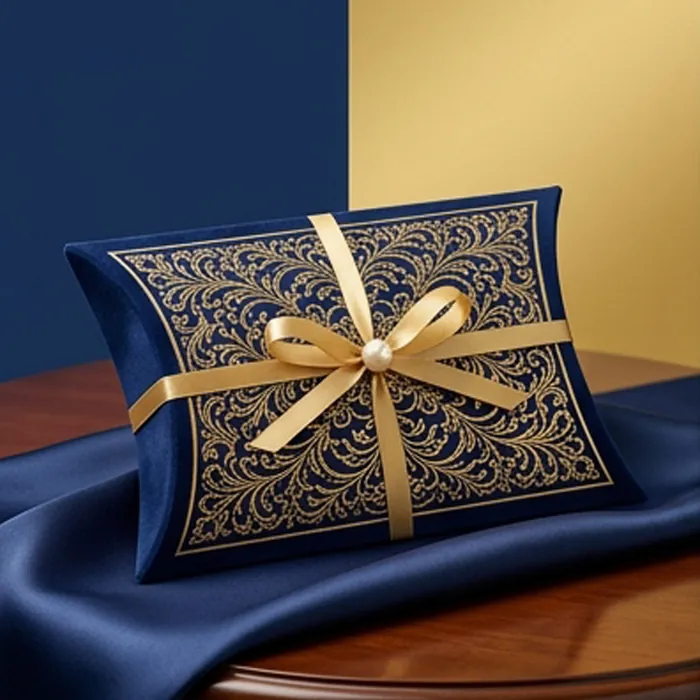
Embossed Pillow Boxes
Tooled relief — a brand mark you can feel before you read it.
View options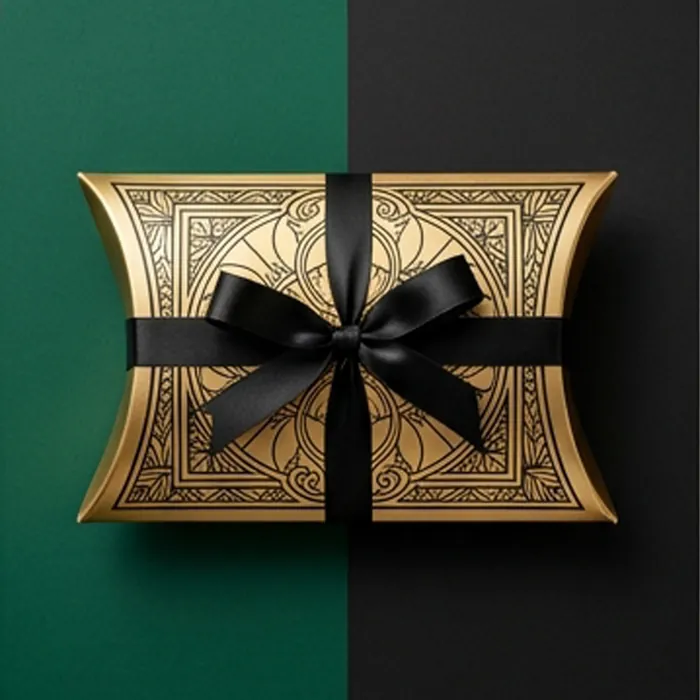
Gold Pillow Boxes
Real metallic foil, metallic board, or printed gold — three different things.
View options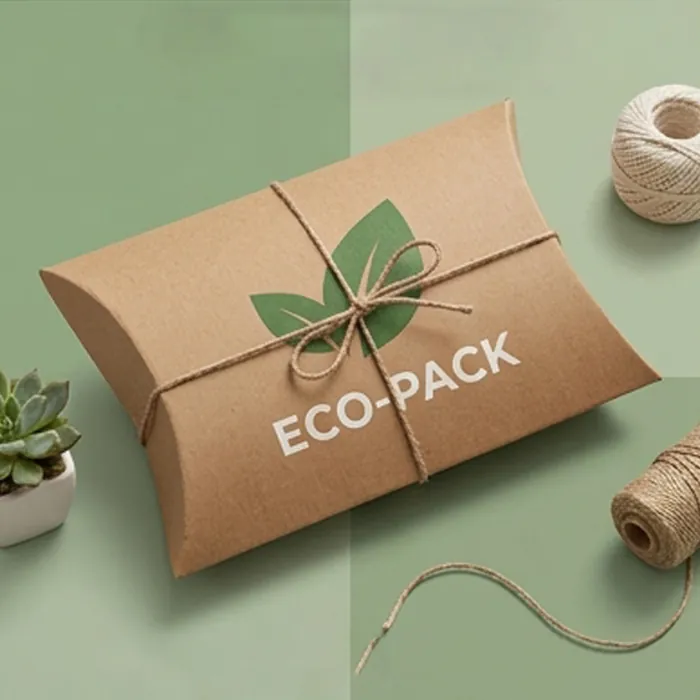
Corrugated Pillow Boxes
Fluted board for weight, protection and packs that travel without an outer carton.
View options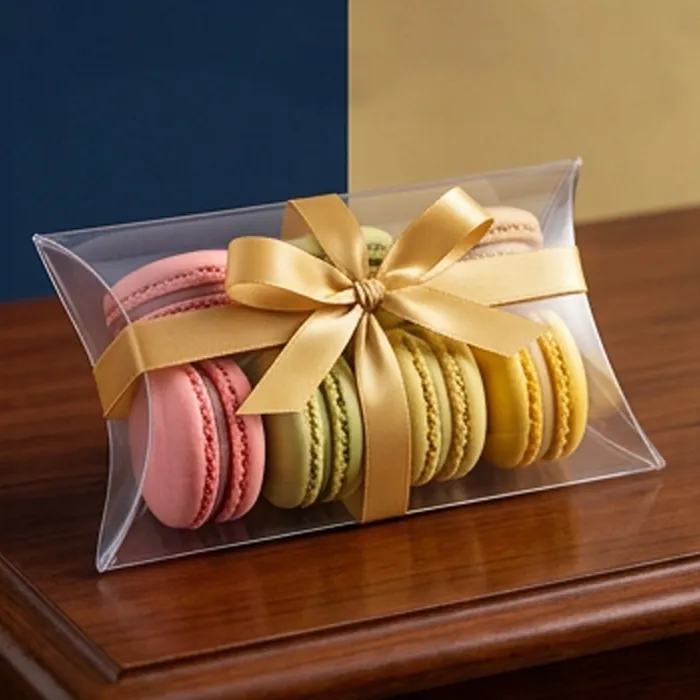
Clear Pillow Boxes
Transparent PET or PVC, for products that sell themselves on sight.
View optionsPrinted packaging: common questions
What is the difference between printed, branded and personalized boxes?
In practice, nothing — they all describe a box with your artwork on it. We use one page rather than three because three pages competing for the same intent helps nobody, least of all someone trying to find an answer.
How many colors can I print?
Full CMYK plus up to two spot colors is a normal maximum on this format. On a design with one to three colors, spot printing is often cheaper than process and reproduces more consistently.
Can you match my brand color exactly?
With a Pantone reference, yes, printed as a spot ink. From a hex or screen value we convert to the nearest match and send a printed draw-down for approval, because a monitor emits light and ink reflects it.
Can you print on kraft board?
Yes, and dark single colors look excellent on it. Pale and pastel colors need an opaque white base first, because there is no white in the sheet for the ink to sit on.
Can the inside be printed?
Yes, on a board coated both sides. On a pillow box the inside face is genuinely visible as the tuck opens, and even a flat color there changes how the pack feels.
What artwork do you need?
Press-ready PDF, AI or EPS, in CMYK or with Pantone references, with type outlined and 3 mm of bleed. Our artwork guide sets out the full requirements.
Can you print a small quantity?
Yes. At low volumes the plates and press setup dominate the price, so we will show you where the fixed costs sit and what is worth simplifying rather than just quoting a high unit figure.
Do you print variable information?
Yes — shade names, model numbers, edition numbers and per-guest names all run as variable data from a supplied list. It is what makes a range with dozens of variants economic.
Next step
Send the artwork and we will tell you how it will print
Send the product, the quantity and the date you need it on a shelf. We come back with a written quote, a specification and an honest view of anything in the brief that will not work.