By Industry
Earring Pillow Boxes
Almost all earring packaging is built around a card. The posts push through two punched holes, the backs go on behind, and the piece is held flat and visible with the card carrying the branding. The box exists to protect that card and give the pack a finished form.
That makes the card the important component. Hole spacing has to match the piece, the board has to be stiff enough that the posts do not tear it, and the printed area around the holes has to be planned so the earrings do not cover the logo.
- Punched display cards with spacing set to your piece
- Card board specified so posts do not tear the holes
- Box sizes from a stud pair upward
- Hang hole option so the whole pack goes on a peg
- Branding printed on the card, the box, or both
Get a quote for earring pillow boxes
Tell us the product, the size and roughly how many. We reply with a written quote and a specification.
Specification at a glance
| Card | Heavier stock than the box; punched to your post spacing |
|---|---|
| Box | Small format, cut to the card footprint |
| Printing | Card, box or both; spot color, CMYK, foil |
| Add-ons | Reinforced hang holes, back-retention pockets |
| Minimum order | Quoted per specification |
What happens next
-
We read the brief
And come back with questions rather than assumptions if something is missing.
-
You get a written quote
With the specification stated — board, printing, finishing and any tooling.
-
We draw the dieline
Cut to your product, with the usable print area and crease zones marked.
-
Sample, then produce
A physical sample in the final board before a full run, where it is worth it.
Getting the card right
-
Measure the actual post spacing
Studs vary. Hoops and drops need a wider or single-hole layout. Send us the piece rather than a nominal figure.
-
Specify a stiff enough board
A thin card tears at the punch when the post is pushed through. We normally use a heavier stock for the card than for the box.
-
Plan the artwork around the piece
The earrings sit in the middle of the card. Put the logo above and any copy below, or the piece will cover it.
-
Decide where the backs go
Behind the card, or in a small pocket. A loose back in the box will be lost.
-
Match the card to the box internally
The card should fill the box footprint so it cannot slide when the pack is handled.
Formats that come up regularly
- Stud pair on a two-hole card — the most common by far
- Hoops on a single punched hole with a retaining notch
- Drop earrings on a taller card so the piece hangs clear
- Mismatched or asymmetric pairs, which need a bespoke hole layout
- Multi-pair sets on a divided card for a gift format
Peg display and small-format retail
Earrings sell heavily from peg hooks and small counter units, and at that scale the pack has to be readable from a foot away. That means a large, simple brand mark and a clear product name — not a layout.
A hang hole through the box and the card together lets the whole pack peg, which is neater than hanging the card alone. It needs reinforcement at the punch, which we build into the die.
- Reinforced hang hole through box and card together
- Brand mark large enough to read at arm's length
- Card color contrasting with the earring metal
- Flat base area if the pack sits in a counter bowl
Earring Pillow Boxes: common questions
Answers to what customers most often ask before ordering this specification.
What hole spacing should the card have?
Whatever matches your piece. Stud spacing varies and hoops need a different layout entirely, so send us a sample pair rather than a nominal measurement.
My cards keep tearing at the holes. Why?
The card stock is too light for the post. We specify a heavier board for the card than for the box precisely to avoid this.
Where do the earring backs go?
Usually pushed on behind the card, which holds them securely. For a more premium presentation a small pocket or a second card keeps them tidy and unmissable.
Can the whole pack hang on a peg?
Yes, with a reinforced hole punched through both box and card. It has to be designed into the die, so mention it when you request pricing.
Should I brand the card or the box?
The card is seen at the point of use and the box at the point of sale, so most brands do both — a large mark on the box, a smaller one on the card. Printing only the card is the cheaper route.
Is this suitable for heavier drop earrings?
Yes, with a taller card so the piece hangs clear and a heavier stock so it does not bow. The general jewelry packaging page covers the insert options for larger pieces.
Can the card be printed on both sides?
Yes, and the reverse is a natural home for care copy, metal information or a barcode. It is a second printed surface you are already paying to produce.
What holds clip-on or screw-back earrings?
A slotted or notched card rather than punched holes, since there is no post to push through. Tell us the fitting type and we will design the retention around it.
Do you supply the earring backs separately?
We supply packaging rather than findings. What we can do is add a small pocket or a second card position so the backs you supply are held rather than loose.
Can one card size cover studs and drops?
Rarely, because a drop needs the piece to hang clear below the punch. Two card heights on a common box is usually the better answer.
Related
Others that suit the same brief
Chosen because they solve a nearby problem — a different material, a different scale, or the same product with one structural change.
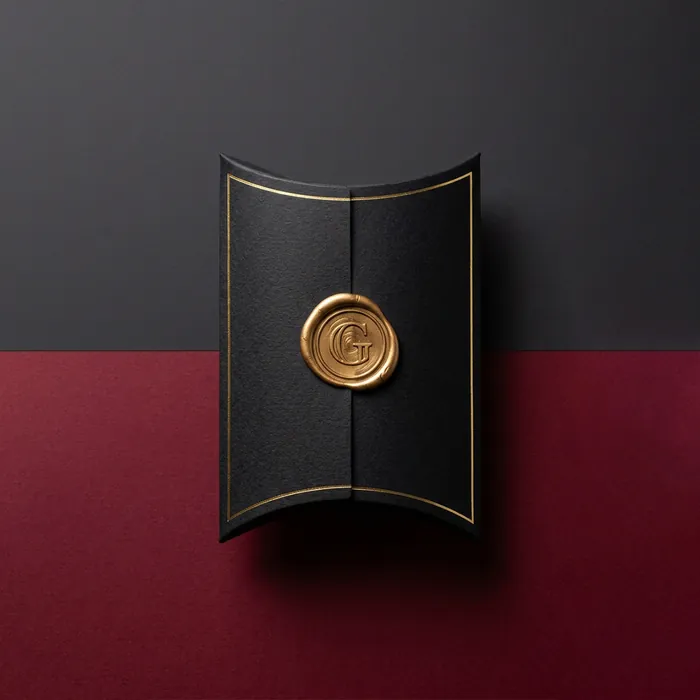
Jewelry Pillow Boxes
Presentation packaging at a fraction of a rigid jewelry box cost.
View options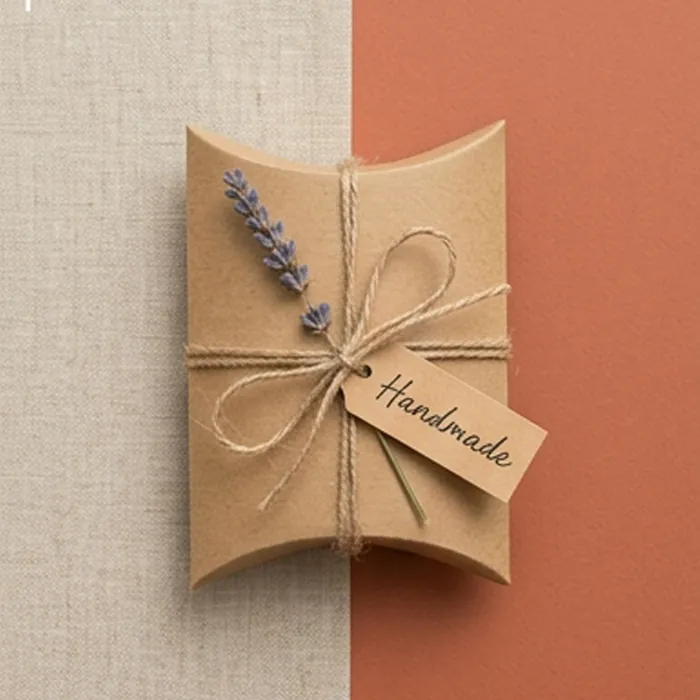
Small Pillow Boxes
Mini formats for samples, jewelry and favors — down to the limit the tuck allows.
View options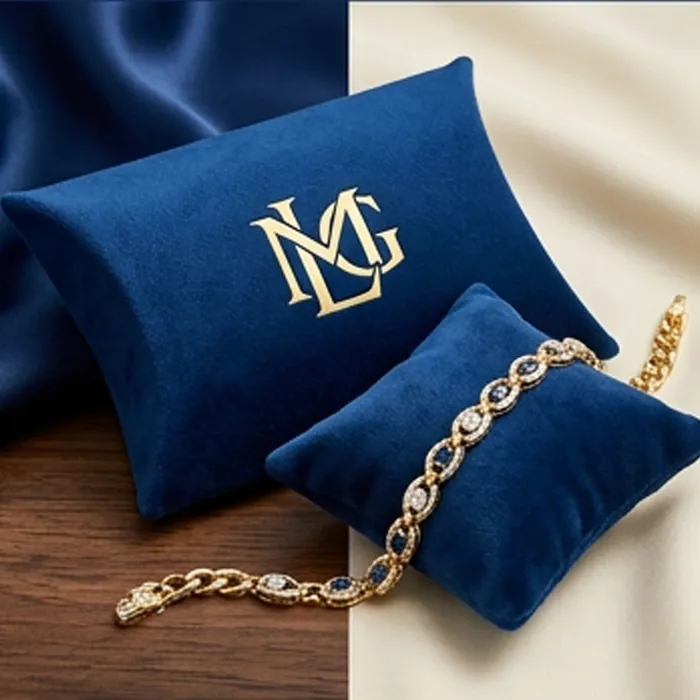
Bracelet Pillow Boxes
Elongated formats with a retaining insert so the piece stays laid out.
View options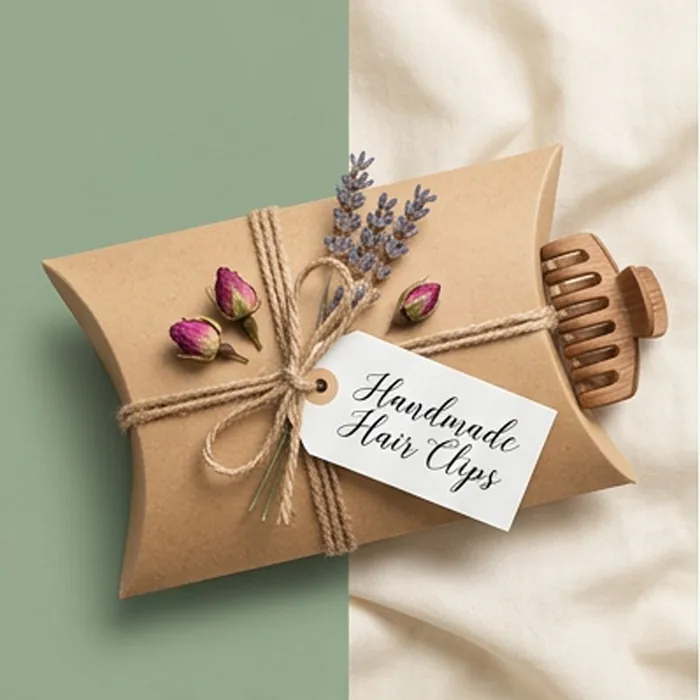
Hair Clip Pillow Boxes
Display cards and sized boxes for clips, claws, barrettes and scrunchies.
View options
Kraft Pillow Boxes
Natural brown kraft board with a visible fiber texture, printed one or two colors.
View optionsNext step
Ready to specify earring pillow boxes?
Send the product, the quantity and the date you need it on a shelf. We come back with a written quote, a specification and an honest view of anything in the brief that will not work.