Pillow boxes
Pillow Boxes by Feature
Some packaging decisions are about the surface and some are about the structure. Everything on this page is structural: a change to the die, the board or the finishing process rather than to what is printed on it.
Structural features have to be designed in from the start. A window has to clear the crease zones, a handle has to sit where the board can carry the load, and a postal closure changes the whole specification. None of them can sensibly be added after the dieline is drawn.
Tell us what goes in the box
Not sure which of these suits your product? Describe it and we will recommend a specification rather than a page.
The full group
Each page covers what that specification does well, where it fails, and what it costs you to choose it.
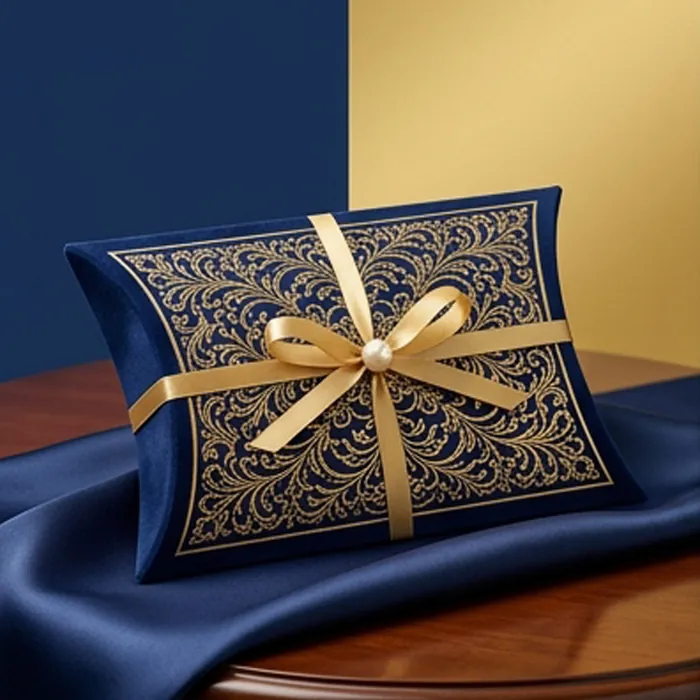
Embossed Pillow Boxes
Tooled relief — a brand mark you can feel before you read it.
View options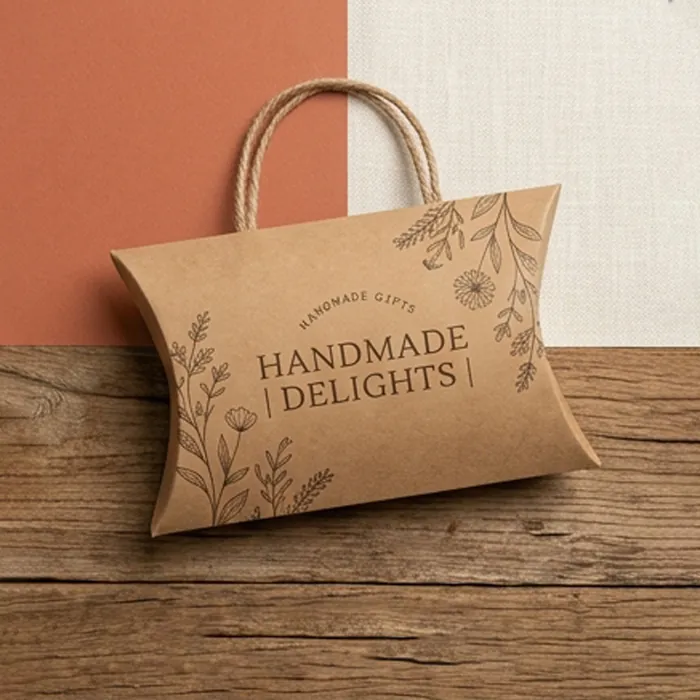
Pillow Boxes with Handle
A carry handle that turns the pack into its own gift bag.
View options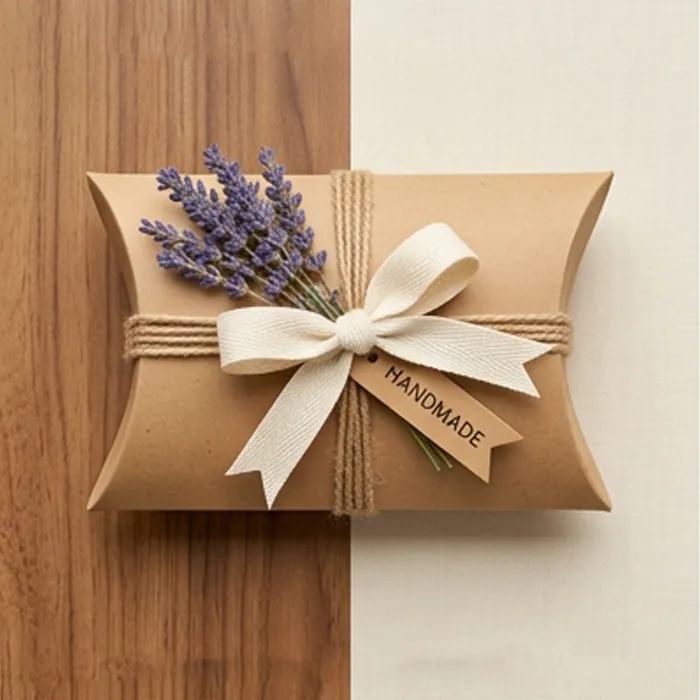
Pillow Boxes with Ribbon
Satin, grosgrain, organza or jute — the finish that reads as a gift immediately.
View options
Pillow Boxes with Window
A die-cut aperture that shows the product without losing the printed panel.
View options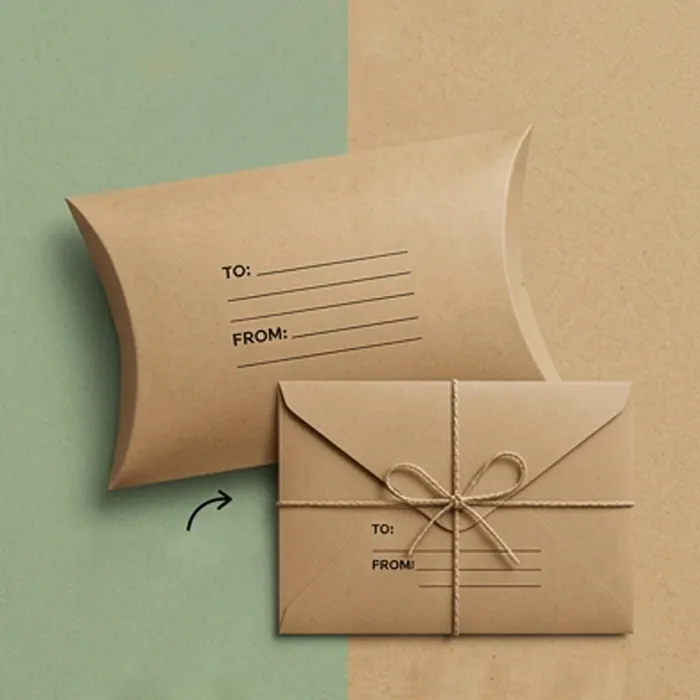
Pillow Mailers and Envelopes
Pillow packs specified for the post: address panel, secure closure, sized to rate.
View options
Standing Pillow Boxes
Engineered to stand upright rather than lie flat — for shelf and counter display.
View optionsFeatures that have to be in the dieline from day one
- A die-cut window, and its exact position relative to the creases
- A carry handle and its reinforcement
- Punched slots for ribbon, or holes for peg display
- A standing base, which is cut differently from a flat-lying tuck
- A sealed postal closure and a clear address panel
What the curved ends rule out
The two curved tucks are the working part of a pillow box. They fold, they carry the closing tension, and they are the reason the format holds together without glue.
That makes them off-limits for almost everything else. Windows, handles, heavy embossing and label panels all have to sit within the flat central area, and the usable zone is smaller than the flat dimension suggests. We mark it on every dieline before artwork begins.
By Feature: common questions
Can I add a window to an existing box design?
It needs a new die, and the aperture has to fit within the flat panel clear of the creases. If the current artwork fills that area, the design will need adjusting too.
How much weight will a die-cut handle carry?
It depends on the board, the reinforcement and the cut shape, so we test rather than publish a number. Give us the filled weight and we will prove it on a sample.
Does a window weaken the box?
Any aperture reduces stiffness. On a small or medium window in a correctly weighted board it is not noticeable; a very large one needs a heavier stock to compensate.
Can a pillow box be posted on its own?
With a postal specification — a sealed closure, an address panel and board chosen for the journey. A retail pillow box sent as-is usually arrives open and dented.
Next step
Send us the product, not a box size
Send the product, the quantity and the date you need it on a shelf. We come back with a written quote, a specification and an honest view of anything in the brief that will not work.