Design
Packaging Ideas for Small Beauty Products
Small beauty packs run out of space before they run out of ambition. These are the approaches that work when the printable panel is smaller than a business card.
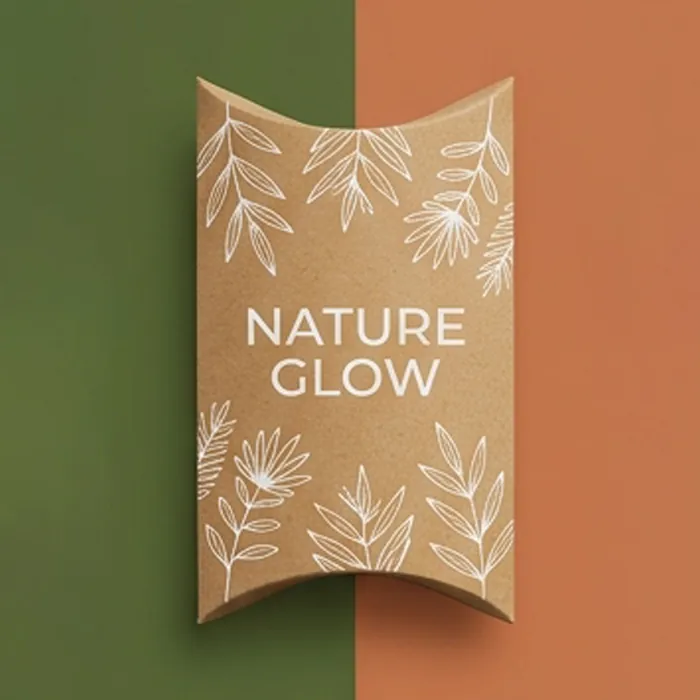
Accept that the front panel does one thing
On a lip balm or a gloss box, the front panel can carry a brand mark and a variant name legibly, and that is roughly it. Trying to add a claim, an illustration and a strapline produces something that reads as cluttered at actual size even when it looks balanced on a screen at 300 per cent.
The productive response is to decide what the one thing is. For a shade range it is almost always the shade. For a natural brand it is often the ingredient. Everything else goes on the reverse or on a tag.
Ideas that work at small scale
- One spot color on kraft, with the mark debossed rather than printed twice
- A printed interior in a contrast tone, seen when the tuck opens
- A shade block printed as a swatch, so the variant is identifiable at a glance
- A small foil monogram — foil reads as precision at small sizes
- A printed swing tag, which adds copy space without crowding the box
- A belly band, which lets one box carry several variants
Sets solve the space problem
A three-piece or five-piece set gives you a larger outer pack with room for a proper layout, while the individual items stay simple. It also raises the transaction value, which is usually the reason brands build them in the first place.
The packaging work moves to the insert: a die-cut tray that seats each item so the set opens as an arrangement rather than a jumble. That component is cheap relative to the box and it is what makes a set feel deliberate.
Where the space actually goes
On a typical small cosmetic box, before any design work begins.
| Panel | Usually carries | Realistically free? |
|---|---|---|
| Front flat panel | Brand and variant | Yes — this is your design space |
| Reverse flat panel | Ingredients, net contents, warnings | No — spoken for |
| Curved tuck ends | Pattern, or nothing | Partly — not for information |
| Interior | Contrast color or a short line | Yes, at the cost of a second pass |
| Coding area | Batch and date | No — must stay coatable |
One box, many variants
Beauty ranges grow. A brand with four shades this year has eleven next year, and bespoke artwork per shade becomes unaffordable long before that.
Fix the box, the layout and the finish, and change exactly one element per variant — printed inline rather than as new artwork. It is the approach that lets a range scale, and it is covered in more depth in our piece on packaging a range with many variants.
Four upgrades that cost little at small scale
In rough order of effect for the money, on a pack where the panel is already full.
-
Print the interior
A flat contrast color inside is a fraction of the cost of full artwork and is seen at the exact moment the customer is paying attention.
-
Add a blind deboss
No ink, no foil, one brass die. On an uncoated stock it adds a second visual layer without taking any panel space.
-
Use a swing tag
A second printed surface that hangs off the pack rather than competing with it. Ideal for the copy that will not fit.
-
Move to a dyed-through board
On a dark pack it removes the white crease line, which at this scale is the detail people notice first.
Questions this raises
How much can fit on a lip balm box?
A brand mark and a variant name on the front, and the ingredient copy on the reverse at the minimum legible size. Anything more usually means something is too small to read.
How do I make a small pack feel premium?
A restrained finish and one well-executed detail — a small foil mark, a printed interior, or a blind deboss. Adding more elements at this scale reads as cluttered rather than luxurious.
Are sets worth the extra packaging cost?
Usually, because they raise the transaction value substantially and give you a larger canvas. The cost sits mostly in the insert, which is cheap relative to its effect.
Can I add copy on a tag instead of the box?
Yes, and on very small packs it is often the right answer. A printed swing tag gives you a second surface without crowding the front panel.