Category
Are Pillow Boxes Good Enough for Fine Jewelry?
We make pillow boxes, so treat what follows accordingly — but there is a line in this category, and pretending it does not exist helps nobody.
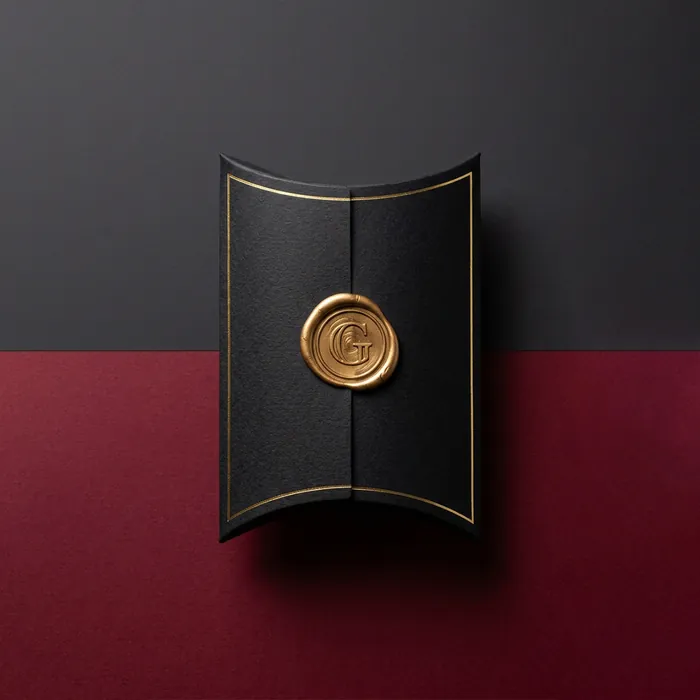
What a rigid box does that a pillow box cannot
Weight and permanence. A rigid hinged box has mass, it opens with a resistance that reads as engineering, and it gets kept in a drawer for years. That is a genuine product attribute, not a marketing claim, and no pillow box reproduces it.
At a certain price point customers expect it. If you are selling a piece where the box is part of what is being paid for — an engagement ring, a heritage brand, anything where the purchase is an event — a pillow box will read as a downgrade regardless of how well it is specified.
What a pillow box does that a rigid box cannot
It costs a fraction as much, it ships and stores flat, and it can be posted without an outer carton. Those are not consolation prizes; for an online seller they are decisive.
A rigid box has to be shipped assembled, stored assembled, and put inside something else to be mailed. For a brand with a small studio and a direct-to-customer model, that is three real costs against one perceived benefit.
Where each one wins
Rigid box
- High-ticket pieces where the box is part of the purchase
- Counter sales where the customer opens it in front of you
- Brands whose positioning depends on physical weight
- Products kept and stored in the original packaging
Pillow box
- Mid-market and fashion jewelry
- Online selling where the pack must post safely
- Small studios where storage space is limited
- Ranges with many pieces and modest volumes each
What closes most of the gap
A well-specified pillow box is a long way from a cheap one. These are the differences that matter:
- A dyed-through board, so the crease and cut edge stay colored
- An insert that presents the piece flat rather than storing it loose
- A box sized tightly, so the piece does not look lost
- One small foil or debossed mark, executed cleanly
- A printed interior, visible the moment the tuck opens
A practical middle route
Several brands we supply run both: a pillow box as the standard pack and a rigid box as a paid gift-wrap upgrade at checkout. It costs nothing to offer, it captures the customers who want the occasion, and it keeps the base cost of every order down.
If you go that way, keep the two visually related so the upgrade reads as the same brand rather than a different one. The specification detail is on our jewelry packaging page.
What each format costs you elsewhere
The unit price is the visible number. These are the costs that show up afterward.
| Pillow box | Rigid hinged box | |
|---|---|---|
| Storage per 1,000 | A few cartons, flat | A pallet, assembled |
| Shipping weight | Low | Several times higher |
| Posting to a customer | Possible in E-flute | Needs an outer carton |
| Lead time on custom tooling | Days to weeks | Weeks to months |
| Reorder flexibility | High — small runs are normal | Lower; minimums are usually larger |
Questions this raises
Will customers think a pillow box is cheap?
A badly specified one, yes. A dyed-through board with a proper insert and a clean foil mark reads as considered rather than cheap — the difference is almost entirely in the specification.
Can a pillow box be posted with jewelry inside?
With a postal specification, yes — sealed closure, address panel and appropriate board. That is a genuine advantage over a rigid box, which needs an outer carton.
What is the single most worthwhile upgrade?
A dyed-through board. White creases on a dark box are the detail customers notice first when they hold the pack.
Do rigid boxes have longer lead times?
Generally yes, particularly for custom tooling. A pillow box can be die-cut and delivered considerably faster, which matters for a launch date.