Shipping
Shipping Pillow Boxes Without an Outer
A retail pillow box and a postal one are different products. Sending the first through a carrier network is the most expensive packaging mistake a direct-to-customer brand can make, and it is entirely avoidable.
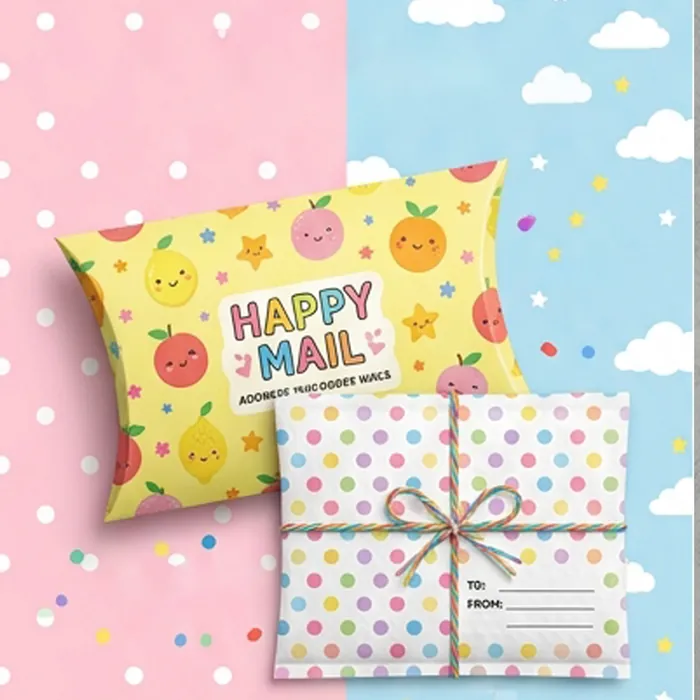
The five things that change
-
The closure
A friction tuck opens in a sorting machine. A peel-and-seal strip, a tamper-evident seal or a glued flap is what keeps the pack shut.
-
The board
Solid board dents on a large flat face and crushes at the ends. E-flute gives roughly three times the crush resistance.
-
The label area
A shipping label needs a flat area with clear margins, designed into the layout rather than applied over artwork.
-
The dimensions
Carriers price in bands, and thickness is usually the threshold that matters. A few millimeters can move a whole shipment into a higher tier.
-
The interior
This is the customer's first physical contact with your brand. Printing the inside face costs very little and changes the moment entirely.
Closure options
- Peel-and-seal adhesive strip — fastest to pack, most secure
- Tamper-evident perforated strip, so interference is visible
- Glued flap, sealed at the point of packing
- Double closure — adhesive plus a tuck, for higher-value goods
- A second strip so customers can reseal and return
Rate bands are worth more attention than the packaging
Over a year, the difference between two carrier rate bands usually dwarfs the difference between two packaging specifications. Thickness is the threshold that most often decides it, and a pack a few millimeters over a limit costs on every single shipment.
Tell us which markets you ship to and we will size against the tightest threshold rather than the most convenient one. Postal limits differ across the United States, the United Kingdom, Canada and Australia, and designing to only one of them is a common and expensive oversight.
Choosing a construction
| Contents | Construction | Note |
|---|---|---|
| Flat and robust — cards, sheets, fabric | Heavy solid board | Lighter and cheaper to send |
| Small and rigid — jewelry, accessories | Solid board or E-flute | E-flute if the value warrants it |
| Depth or moderate weight | E-flute | The general answer for a pack with volume |
| Fragile — glass, ceramic, confectionery | E-flute plus an insert | Movement is what causes breakage |
| Heavy and rigid | Not a pillow box | A rigid carton is the honest answer |
Returns
- A second adhesive strip lets customers reseal the original pack
- It removes a step from your returns process and a cost from the customer
- The board has to survive two journeys rather than one
- A clear opening line stops the pack being destroyed on the way in
Questions this raises
Can I post a retail pillow box as it is?
Usually not. A friction tuck opens in sorting, and a large flat face dents. Without a sealed closure and appropriate board it generally arrives open and damaged.
Do I always need corrugated?
No. Flat and robust contents travel acceptably in a heavy solid board. Anything with depth, weight or fragility is better in E-flute.
How do I know which rate band I fall into?
Check your carrier's thresholds for the markets you ship to — thickness is usually the deciding dimension. Tell us the limits and we will size against the tightest one.
Is a tamper-evident closure worth it?
For higher-value contents, yes. Visible interference protects both you and the customer in a dispute. For low-value goods a plain adhesive strip is enough.
Should the inside be printed?
Yes, if the budget allows. It is the first thing the customer sees on opening and it is one of the cheapest brand improvements available on a mailer.